Lab-Grown Moissanite Vs. Lab-Grown Diamond: Key Differences And Factors to Consider While Buying


If you’re on the lookout for diamonds, you might face the dilemma of what kind of diamond to buy. Your options are many—lab-grown diamonds, moissanite diamonds, synthetic diamonds, and more.
But how would you know the difference between these different types of gemstones?
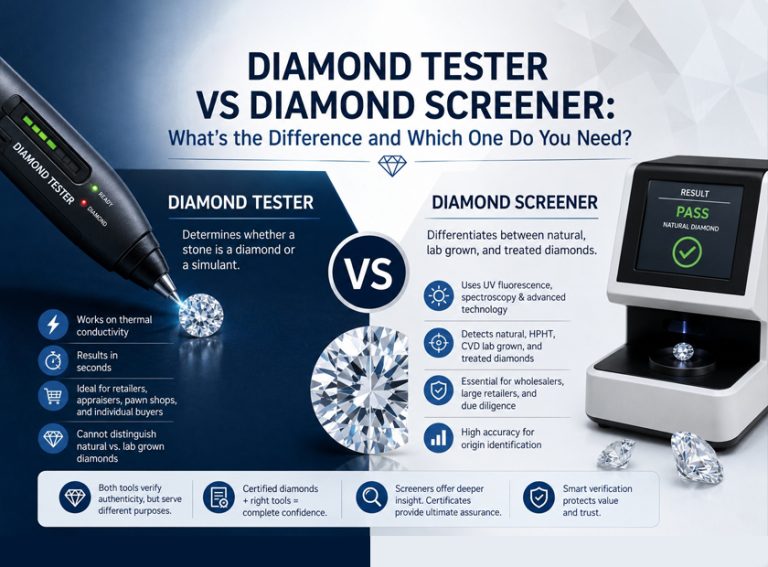
If you’re completely new to the world of gems, you might think professional diamond testers are the only way to tell them apart. However, this guide makes it easy to understand the difference between lab-grown diamonds and lab-grown moissanite by clearly explaining how they vary in appearance, value, durability, and overall performance.
Without careful examination, diamonds and moissanite may appear identical to some people. Yet they differ greatly in terms of colour, brilliance, hardness, clarity, and long-term value. In this blog, we compare lab-grown diamonds and lab-grown moissanite to help you decide which option is more suitable based on your needs, budget, and expectations.
What Is the Difference Between Lab-Grown Diamonds and Lab-Grown Moissanite?
Both lab-grown diamonds and moissanite are created in controlled laboratory environments, but they are not the same gemstone.
-
Lab-grown diamonds are chemically and structurally identical to natural diamonds.
-
Moissanite is made from silicon carbide and has different optical properties.
Because of these differences, each gemstone behaves differently when it comes to sparkle, durability, and value retention.
Factors That Differentiate Moissanite and Diamonds
Both diamonds and moissanite are evaluated using similar grading parameters commonly known as the 4 Cs—cut, colour, clarity, and carat. While these factors apply to both gemstones, they are measured and perceived differently.
Below is a detailed breakdown of each factor:
Colour:
The hue of lab-grown diamonds and moissanite differs noticeably under certain lighting conditions.
-
Lab-grown diamonds are graded on a D to Z colour scale, with D being completely colourless.
-
Moissanite is not truly colourless and usually shows a slight tint.
-
Most moissanite stones visually resemble a GIA-certified K-colour diamond.
-
Depending on lighting, moissanite may display yellow, grey, or green undertones.
Smaller moissanite stones tend to appear more colourless, making them harder to distinguish from diamonds at first glance.
Hardness:
When compared to moissanite, lab-grown diamonds have a harder surface.
-
Diamonds rank 10 on the Mohs scale of hardness, making them the hardest naturally occurring material.
-
Moissanite scores 9.25 on the Mohs scale, which is higher than most gemstones.
Both stones are highly durable and suitable for everyday wear, but diamonds offer maximum scratch resistance.
Price and Value:
Diamonds are significantly more expensive than moissanite.
-
Moissanite allows buyers to purchase a larger stone at a lower price.
-
However, moissanite carries less long-term value and minimal resale potential.
-
Lab-grown diamonds, while more expensive, offer greater value retention and can be passed down through generations without losing significance.
If long-term worth matters to you, lab-grown diamonds are the stronger option.
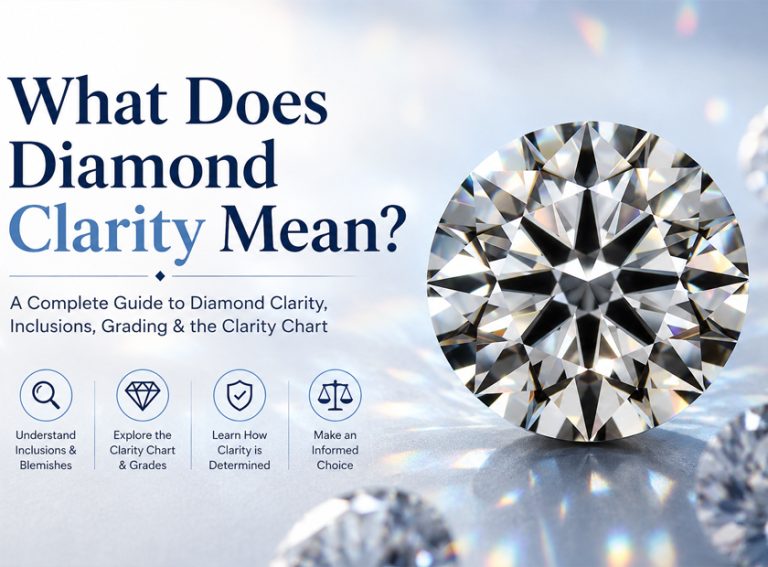
Clarity:
Clarity refers to the presence of internal and surface-level flaws.
-
Lab-grown diamonds may contain minor inclusions, similar to natural diamonds.
-
Moissanite is produced in a lab-controlled environment and typically has very high clarity.
-
Inclusions in moissanite are rare and usually invisible to the naked eye.
Brilliance and Sparkle:
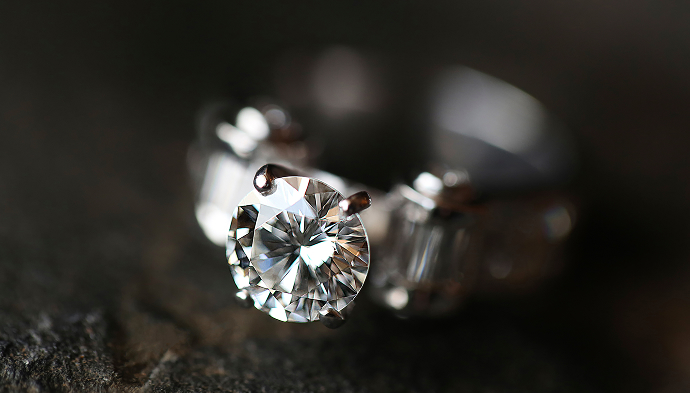
The most noticeable difference between moissanite and diamonds is their brilliance.
-
Moissanite has more fire and sparkle than diamonds.
-
It has a dispersion value more than double that of a diamond, creating rainbow flashes.
-
Moissanite is doubly refractive, which enhances its brilliance.
-
Diamonds produce a more subtle, white sparkle, often preferred for a classic look.
Because of its intense rainbow effect, moissanite can sometimes appear less natural than a diamond under bright light.
Lab-Grown Diamond vs Lab-Grown Moissanite: Quick Comparison
| Feature | Lab-Grown Diamond | Lab-Grown Moissanite |
| Composition | Carbon | Silicon Carbide |
| Hardness |
10 |
9.25 |
| Colour | D–Z scale | Slight tint |
| Brilliance | White sparkle | Rainbow fire |
| Price | Higher | More affordable |
| Value Retention | High | Low |
| Certification | GIA / IGI | Limited |
Factors to Consider When Buying Lab-Grown Diamonds or Moissanite
When choosing between lab-grown diamonds and moissanite, quality should always come first.
Quality Checklist
Look for:
-
High fire and brilliance
-
Excellent polish and symmetry
-
Minimal surface scratches
-
No visible colour flaws unless intentionally chosen
Because moissanite offers excellent quality at a fair price, avoid settling for stones with obvious colour or clarity issues.
Certification and Trust
Always buy from a trusted lab-grown diamond merchant. Make sure to ask for:
-
A grading report covering the 4 Cs
-
A diamond certificate for lab-grown diamonds
-
Transparency regarding sourcing and manufacturing
Certification ensures authenticity and helps protect your investment.
Settings and Design Flexibility
Moissanite works well in almost any jewellery setting and pairs beautifully with lab-grown diamonds and other gemstones. Its adaptability makes it easy to experiment with both modern and traditional designs, ensuring you can find a piece that truly matches your style.
Which Should You Choose: Lab-Grown Diamond or Moissanite?
Both lab-grown moissanite and lab-grown diamonds are excellent choices.
-
Choose lab-grown diamonds if you value durability, long-term worth, and traditional diamond appearance.
-
Choose moissanite if you prioritise affordability, larger stone size, and maximum sparkle.
Your final decision should be based on your budget, preferences, and long-term expectations.
Conclusion
Lab-grown moissanite and lab-grown diamonds each offer unique advantages. Understanding their differences in colour, brilliance, hardness, clarity, and value makes it easier to choose the gemstone that best fits your lifestyle and goals.
With the right knowledge, you can make a confident and informed buying decision.