What Is Diamond Spread And How Does Diamond Cut Affect Spread?
While carat weight is the most explored factor when buying diamonds, it is important to know that two diamonds with the same carat weight can look different in size.
That’s because of diamond spread, an important factor that is often overlooked.
By understanding diamond spread, you can choose a diamond that offers the best value in size and aesthetics.
Here’s a guide to understand diamond spread and how diamond cut affects spread.
What is diamond spread?
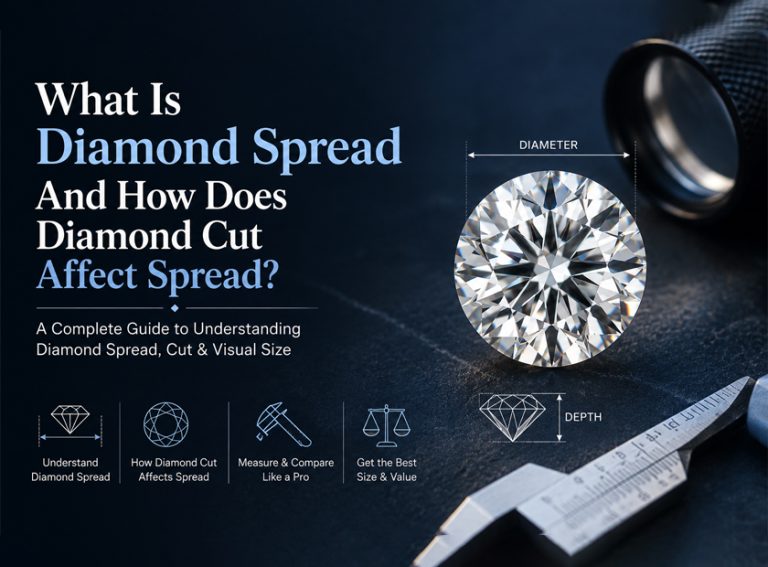
Diamond spread is the face-up size of a diamond, which means how large the diamond appears when seen from the top. It is measured as the diameter of the diamond across the widest point. It is measured in millimeters (mm).
Why does diamond spread matter when buying a diamond?
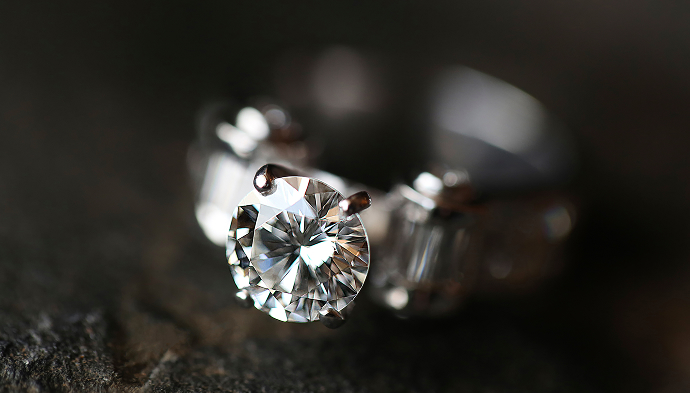
When diamonds are placed into settings, for example, a finger ring, only the table and crown are visible. The depth of the diamond is hidden in the setting. The spread of the diamond, which is the face-up diameter, determines how big it looks. Hence, diamond spread matters, because:
-
It helps compare diamonds of the same carat weight
-
Identify diamonds that offer better visual size
-
Avoid paying more for a diamond that looks undersized
-
Make a smarter, and more informed purchase decision
How is diamond spread measured?
Diamond spread is measured using a millimeter gauge or precision caliper. For round diamonds, it is the average diameter across two perpendicular measurements. For fancy diamond cut shapes, such as oval, pear, and cushion, measurements include both length and width.
Diamond diameter vs carat weight
Did you know, there is an expected diamond range for each carat weight in round brilliant diamonds? For example, a 1 carat round diamond should have a diameter of 6.4-6.5 mm. A smaller diameter means weight is hidden in excessive depth, and larger diameter means it may be shallow.
What is the relationship between diamond cut and diamond spread?
Cut is one of the biggest factors that determines how a diamond’s carat weight translates into its visible size. A diamond with high-quality cut displays maximum spread, whereas a poorly cut diamond hides weight where it cannot be seen.
How do cut proportions influence spread?
The diamond cut proportions include table size, crown angle, pavilion depth, girdle richness, and total depth. Together, these elements determine both optical performance and face-up size. If these proportions are in balance, the diamond reflects light well and offers an ideal spread for its weight.
However, if the diamond cut has more depth, it retains more weight below the girdle. This can make diamonds look smaller than their carat weight. Diamonds cut too shallow, spread wide but lose brilliance.
What role does depth percentage play in diamond appearance?
When comparing two diamonds of the same carat weight that appear to be different in size, depth percentage is one of the first things to check. Depth percentage is the ratio of a diamond’s depth to its diameter. For round brilliant diamonds, the ideal percentage is typically between 59% and 62.5%. Here are some aspects to note:
-
A depth below 57% indicates a shallow cut, more spread, but poor light return
-
A depth above 64% indicates a deep cut, less spread, with weight hidden underneath
-
Depth in the ideal range offers the best balance of spread and brilliance
How does table size affect the face-up size of diamonds?
The table is the large flat facet on top of the diamond. Table size is expressed as a percentage of the diamond's diameter. For round brilliants, the ideal table percentage is between 54% and 58%. However, many excellent cut stones are 60% to 61%.
A larger table can make a diamond appear slightly wider from the top. However, if it comes at the cost of reduced crown height, the stone may lose its fire and sparkle. Table size alone does not determine spread. It works in combination with all other proportions.
Diamond cut shapes and their impact on diamond spread
Diamond spread characteristics differ based on diamond cut shapes, too. For instance, fancy shapes tend to offer more face-up area per carat compared to round diamonds. Here are some diamond shapes and how they impact diamond spread.
-
Round diamonds: A 1 carat ideal-cut round should measure approximately 6.4 to 6.5 mm.
-
Oval diamonds: A 1 carat oval can measure around 7.0 to 8.0 mm in length.
-
Pear diamonds: A 1 carat pear can measure 8.0 to 9.0 mm in length depending on its length-to-width ratio.
-
Cushion diamonds: A 1 carat cushion typically measures around 5.5 to 6.5 mm, depending on cut style.
-
Emerald diamonds: A 1 carat emerald cut often measures around 6.5 to 7.0 mm in length.
How to compare diamond spread before buying?
Follow these best practices to compare diamond spread when buying diamonds.
1. Check the millimeter measurements
Grading reports by GIA, AGS, GCAL, etc., will include the diameter measurements. For round diamonds, the average diameter should align with the ideal range for the listed carat weight. For fancy diamond shapes, compare the length, width, and depth measurements.
2. Review the depth percentage
Another step to compare diamond spread is to assess the depth percentage. For round brilliants, look for diamonds with depth percentage between 59% and 62.5%. A percentage above 64% indicates hidden weight and reduced face-up size.
3. Use side-by-side comparisons
Many online diamond retailers, such as Grown Diamond Corporation, have diamond comparison tools. Compare diamonds of the same carat weight next to each other and compare their actual mm dimensions.
4. Request face-up images or videos
A diamond photographed from the top shows its true spread far better than a side profile. Video is even better for assessing real-world appearance.
5. Use a diamond spread calculator
There are many online tools that estimate the expected diameter for a given carat weight and diamond shape, which help to identify whether a stone is deep, shallow, or ideal.
Wrapping up
Understanding diamond spread and comparing diamonds for spread can provide a better sense of the diamond’s quality, pricing, and overall value. Online diamond retailers and lab grown diamond manufacturing brands allow customers to compare diamond spread before making purchases.
Besides, diamond grading reports provided by retailers and manufacturers also mention details about diamond cut, diamond spread, among other factors. If you’re looking to buy high-quality lab grown diamonds with the perfect diamond spread, explore Grown Diamond Corporation.
FAQs
Question : What is considered good diamond spread?
Answer : A diamond has good spread when its diameter matches or slightly exceeds the expected millimeter range for its carat weight, for example, a 1 carat round diamond measuring 6.4 to 6.5 mm is considered ideal.
Question : Can a smaller carat diamond look bigger?
Answer : Yes, a well-cut 0.90 carat diamond with ideal proportions can appear larger face-up than a poorly cut 1 carat diamond with a deep or bulky profile.
Question : Does diamond cut matter more than carat weight for appearance?
Answer : Yes, cut determines how much of the diamond's weight is visible from the top, making it the single most important factor in how large and brilliant a diamond actually looks.
Question : Does better diamond spread always mean better value?
Answer : Not always. A diamond with more spread but a shallow cut affects brilliance and fire. Good quality diamonds have the right balance between a strong face-up size and excellent light performance.
{"AutoID":226,"DateCreation":"\/Date(1780663239827)\/","DateModified":"\/Date(1780996560043)\/","CreatedBy":null,"ModifiedBy":"Rahul Bohra","RecordStatus":"I","Title":"What Is Diamond Spread And How Does Diamond Cut Affect Spread?","SubTitle":null,"Description":"\u003cp dir=\"ltr\"\u003eWhile carat weight is the most explored factor when buying diamonds, it is important to know that two diamonds with the same carat weight can look different in size.\u003c/p\u003e\r\n\r\n\u003cp\u003e\u0026nbsp;\u003c/p\u003e\r\n\r\n\u003cp dir=\"ltr\"\u003eThat\u0026rsquo;s because of diamond spread, an important factor that is often overlooked.\u0026nbsp;\u003c/p\u003e\r\n\r\n\u003cp\u003e\u0026nbsp;\u003c/p\u003e\r\n\r\n\u003cp dir=\"ltr\"\u003eBy understanding diamond spread, you can choose a diamond that offers the best value in size and aesthetics.\u0026nbsp;\u003c/p\u003e\r\n\r\n\u003cp\u003e\u0026nbsp;\u003c/p\u003e\r\n\r\n\u003cp dir=\"ltr\"\u003eHere\u0026rsquo;s a guide to understand diamond spread and how diamond cut affects spread.\u003c/p\u003e\r\n\r\n\u003cp dir=\"ltr\"\u003e\u0026nbsp;\u003c/p\u003e\r\n\r\n\u003ch2 dir=\"ltr\"\u003eWhat is diamond spread?\u003c/h2\u003e\r\n\r\n\u003cp dir=\"ltr\"\u003eDiamond spread is the face-up size of a diamond, which means how large the diamond appears when seen from the top. It is measured as the diameter of the diamond across the widest point. It is measured in millimeters (mm).\u003c/p\u003e\r\n\r\n\u003cp dir=\"ltr\"\u003e\u0026nbsp;\u003c/p\u003e\r\n\r\n\u003ch2 dir=\"ltr\"\u003eWhy does diamond spread matter when buying a diamond?\u003c/h2\u003e\r\n\r\n\u003cp dir=\"ltr\"\u003eWhen diamonds are placed into settings, for example, a finger ring, only the table and crown are visible. The depth of the diamond is hidden in the setting. The spread of the diamond, which is the face-up diameter, determines how big it looks. Hence, diamond spread matters, because:\u003c/p\u003e\r\n\r\n\u003cul\u003e\r\n\t\u003cli dir=\"ltr\"\u003e\r\n\t\u003cp dir=\"ltr\"\u003eIt helps compare diamonds of the same carat weight\u003c/p\u003e\r\n\t\u003c/li\u003e\r\n\t\u003cli dir=\"ltr\"\u003e\r\n\t\u003cp dir=\"ltr\"\u003eIdentify diamonds that offer better visual size\u003c/p\u003e\r\n\t\u003c/li\u003e\r\n\t\u003cli dir=\"ltr\"\u003e\r\n\t\u003cp dir=\"ltr\"\u003eAvoid paying more for a diamond that looks undersized\u003c/p\u003e\r\n\t\u003c/li\u003e\r\n\t\u003cli dir=\"ltr\"\u003e\r\n\t\u003cp dir=\"ltr\"\u003eMake a smarter, and more informed purchase decision\u003c/p\u003e\r\n\t\u003c/li\u003e\r\n\u003c/ul\u003e\r\n\r\n\u003ch2 dir=\"ltr\"\u003eHow is diamond spread measured?\u003c/h2\u003e\r\n\r\n\u003cp dir=\"ltr\"\u003eDiamond spread is measured using a millimeter gauge or precision caliper. For round diamonds, it is the average diameter across two perpendicular measurements. For fancy diamond cut shapes, such as oval, pear, and cushion, measurements include both length and width.\u003c/p\u003e\r\n\r\n\u003ch3 dir=\"ltr\"\u003eDiamond diameter vs carat weight\u003c/h3\u003e\r\n\r\n\u003cp dir=\"ltr\"\u003eDid you know, there is an expected diamond range for each carat weight in round brilliant diamonds? For example, a \u003ca href=\"https://www.growndiamondcorp.com/blog/1-carat-lab-grown-diamond/\"\u003e1 carat round diamond\u003c/a\u003e should have a diameter of 6.4-6.5 mm. A smaller diameter means weight is hidden in excessive depth, and larger diameter means it may be shallow.\u003c/p\u003e\r\n\r\n\u003cp dir=\"ltr\"\u003e\u0026nbsp;\u003c/p\u003e\r\n\r\n\u003cp\u003eWhat is the relationship between diamond cut and diamond spread?\u003c/p\u003e\r\n\r\n\u003cp dir=\"ltr\"\u003eCut is one of the biggest factors that determines how a diamond\u0026rsquo;s carat weight translates into its visible size. A diamond with high-quality cut displays maximum spread, whereas a poorly cut diamond hides weight where it cannot be seen.\u003c/p\u003e\r\n\r\n\u003ch3 dir=\"ltr\"\u003eHow do cut proportions influence spread?\u003c/h3\u003e\r\n\r\n\u003cp dir=\"ltr\"\u003eThe diamond cut proportions include table size, crown angle, pavilion depth, girdle richness, and total depth. Together, these elements determine both optical performance and face-up size. If these proportions are in balance, the diamond reflects light well and offers an ideal spread for its weight.\u003c/p\u003e\r\n\r\n\u003cp\u003e\u0026nbsp;\u003c/p\u003e\r\n\r\n\u003cp dir=\"ltr\"\u003eHowever, if the diamond cut has more depth, it retains more weight below the girdle. This can make diamonds look smaller than their carat weight. Diamonds cut too shallow, spread wide but lose brilliance.\u0026nbsp;\u003c/p\u003e\r\n\r\n\u003ch3 dir=\"ltr\"\u003eWhat role does depth percentage play in diamond appearance?\u003c/h3\u003e\r\n\r\n\u003cp dir=\"ltr\"\u003eWhen comparing two diamonds of the same carat weight that appear to be different in size, depth percentage is one of the first things to check. Depth percentage is the ratio of a diamond\u0026rsquo;s depth to its diameter. For round brilliant diamonds, the ideal percentage is typically between 59% and 62.5%. Here are some aspects to note:\u003c/p\u003e\r\n\r\n\u003cul\u003e\r\n\t\u003cli dir=\"ltr\"\u003e\r\n\t\u003cp dir=\"ltr\"\u003eA depth below 57% indicates a \u003ca href=\"https://www.growndiamondcorp.com/blog/what-is-a-spread-or-shallow-cut-diamond-should-you-buy-it/\"\u003eshallow cut\u003c/a\u003e, more spread, but poor light return\u003c/p\u003e\r\n\t\u003c/li\u003e\r\n\t\u003cli dir=\"ltr\"\u003e\r\n\t\u003cp dir=\"ltr\"\u003eA depth above 64% indicates a deep cut, less spread, with weight hidden underneath\u003c/p\u003e\r\n\t\u003c/li\u003e\r\n\t\u003cli dir=\"ltr\"\u003e\r\n\t\u003cp dir=\"ltr\"\u003eDepth in the ideal range offers the best balance of spread and brilliance\u003c/p\u003e\r\n\t\u003c/li\u003e\r\n\u003c/ul\u003e\r\n\r\n\u003ch3 dir=\"ltr\"\u003eHow does table size affect the face-up size of diamonds?\u0026nbsp;\u003c/h3\u003e\r\n\r\n\u003cp dir=\"ltr\"\u003eThe table is the large flat facet on top of the diamond. Table size is expressed as a percentage of the diamond\u0026#39;s diameter. For round brilliants, the ideal table percentage is between 54% and 58%. However, many excellent cut stones are 60% to 61%.\u003c/p\u003e\r\n\r\n\u003cp\u003e\u0026nbsp;\u003c/p\u003e\r\n\r\n\u003cp dir=\"ltr\"\u003eA larger table can make a diamond appear slightly wider from the top. However, if it comes at the cost of reduced crown height, the stone may lose its fire and sparkle. Table size alone does not determine spread. It works in combination with all other proportions.\u003c/p\u003e\r\n\r\n\u003cp dir=\"ltr\"\u003e\u0026nbsp;\u003c/p\u003e\r\n\r\n\u003ch2 dir=\"ltr\"\u003eDiamond cut shapes and their impact on diamond spread\u003c/h2\u003e\r\n\r\n\u003cp dir=\"ltr\"\u003eDiamond spread characteristics differ based on diamond cut shapes, too. For instance, fancy shapes tend to offer more face-up area per carat compared to round diamonds. Here are some diamond shapes and how they impact diamond spread.\u003c/p\u003e\r\n\r\n\u003cul\u003e\r\n\t\u003cli dir=\"ltr\"\u003e\r\n\t\u003cp dir=\"ltr\"\u003e\u003ca href=\"https://www.growndiamondcorp.com/round-cut-diamonds/\"\u003eRound diamonds\u003c/a\u003e: A 1 carat ideal-cut round should measure approximately 6.4 to 6.5 mm.\u003c/p\u003e\r\n\t\u003c/li\u003e\r\n\t\u003cli dir=\"ltr\"\u003e\r\n\t\u003cp dir=\"ltr\"\u003e\u003ca href=\"https://www.growndiamondcorp.com/oval-cut-diamonds/\"\u003eOval diamonds\u003c/a\u003e: A 1 carat oval can measure around 7.0 to 8.0 mm in length.\u003c/p\u003e\r\n\t\u003c/li\u003e\r\n\t\u003cli dir=\"ltr\"\u003e\r\n\t\u003cp dir=\"ltr\"\u003e\u003ca href=\"https://www.growndiamondcorp.com/pear-cut-diamonds/\"\u003ePear diamonds\u003c/a\u003e: A 1 carat pear can measure 8.0 to 9.0 mm in length depending on its length-to-width ratio.\u003c/p\u003e\r\n\t\u003c/li\u003e\r\n\t\u003cli dir=\"ltr\"\u003e\r\n\t\u003cp dir=\"ltr\"\u003e\u003ca href=\"https://www.growndiamondcorp.com/cushion-cut-diamonds/\"\u003eCushion diamonds\u003c/a\u003e: A 1 carat cushion typically measures around 5.5 to 6.5 mm, depending on cut style.\u003c/p\u003e\r\n\t\u003c/li\u003e\r\n\t\u003cli dir=\"ltr\"\u003e\r\n\t\u003cp dir=\"ltr\"\u003e\u003ca href=\"https://www.growndiamondcorp.com/emerald-cut-diamonds/\"\u003eEmerald diamonds\u003c/a\u003e: A 1 carat emerald cut often measures around 6.5 to 7.0 mm in length.\u003c/p\u003e\r\n\t\u003c/li\u003e\r\n\u003c/ul\u003e\r\n\r\n\u003ch2 dir=\"ltr\"\u003eHow to compare diamond spread before buying?\u003c/h2\u003e\r\n\r\n\u003cp dir=\"ltr\"\u003eFollow these best practices to compare diamond spread when buying diamonds.\u0026nbsp;\u003c/p\u003e\r\n\r\n\u003ch3 dir=\"ltr\"\u003e1. Check the millimeter measurements\u003c/h3\u003e\r\n\r\n\u003cp dir=\"ltr\"\u003eGrading reports by GIA, AGS, GCAL, etc., will include the diameter measurements. For round diamonds, the average diameter should align with the ideal range for the listed carat weight. For \u003ca href=\"https://www.growndiamondcorp.com/diamond-shapes/\"\u003efancy diamond shapes\u003c/a\u003e, compare the length, width, and depth measurements.\u003c/p\u003e\r\n\r\n\u003ch3 dir=\"ltr\"\u003e2. Review the depth percentage\u003c/h3\u003e\r\n\r\n\u003cp dir=\"ltr\"\u003eAnother step to compare diamond spread is to assess the depth percentage. For round brilliants, look for diamonds with depth percentage between 59% and 62.5%. A percentage above 64% indicates hidden weight and reduced face-up size.\u003c/p\u003e\r\n\r\n\u003ch3 dir=\"ltr\"\u003e3. Use side-by-side comparisons\u003c/h3\u003e\r\n\r\n\u003cp dir=\"ltr\"\u003eMany online diamond retailers, such as \u003ca href=\"https://www.growndiamondcorp.com/\"\u003eGrown Diamond Corporation\u003c/a\u003e, have diamond comparison tools. Compare diamonds of the same carat weight next to each other and compare their actual mm dimensions.\u003c/p\u003e\r\n\r\n\u003ch3 dir=\"ltr\"\u003e4. Request face-up images or videos\u003c/h3\u003e\r\n\r\n\u003cp dir=\"ltr\"\u003eA diamond photographed from the top shows its true spread far better than a side profile. Video is even better for assessing real-world appearance.\u003c/p\u003e\r\n\r\n\u003ch3 dir=\"ltr\"\u003e5. Use a diamond spread calculator\u003c/h3\u003e\r\n\r\n\u003cp dir=\"ltr\"\u003eThere are many online tools that estimate the expected diameter for a given carat weight and diamond shape, which help to identify whether a stone is deep, shallow, or ideal.\u0026nbsp;\u003c/p\u003e\r\n\r\n\u003cp dir=\"ltr\"\u003e\u0026nbsp;\u003c/p\u003e\r\n\r\n\u003ch2 dir=\"ltr\"\u003eWrapping up\u003c/h2\u003e\r\n\r\n\u003cp dir=\"ltr\"\u003eUnderstanding diamond spread and comparing diamonds for spread can provide a better sense of the diamond\u0026rsquo;s quality, pricing, and overall value. Online diamond retailers and lab grown diamond manufacturing brands allow customers to compare diamond spread before making purchases.\u0026nbsp;\u003c/p\u003e\r\n\r\n\u003cp\u003e\u0026nbsp;\u003c/p\u003e\r\n\r\n\u003cp dir=\"ltr\"\u003eBesides, diamond grading reports provided by retailers and manufacturers also mention details about diamond cut, diamond spread, among other factors. If you\u0026rsquo;re looking to buy high-quality lab grown diamonds with the perfect diamond spread, explore Grown Diamond Corporation.\u003c/p\u003e\r\n\r\n\u003cp dir=\"ltr\"\u003e\u0026nbsp;\u003c/p\u003e\r\n\r\n\u003ch2 dir=\"ltr\"\u003eFAQs\u003c/h2\u003e\r\n\r\n\u003cp dir=\"ltr\"\u003e\u003cstrong\u003eQuestion : What is considered good diamond spread?\u0026nbsp;\u003c/strong\u003e\u003c/p\u003e\r\n\r\n\u003cp dir=\"ltr\"\u003eAnswer : A diamond has good spread when its diameter matches or slightly exceeds the expected millimeter range for its carat weight, for example, a 1 carat round diamond measuring 6.4 to 6.5 mm is considered ideal.\u003c/p\u003e\r\n\r\n\u003cp\u003e\u0026nbsp;\u003c/p\u003e\r\n\r\n\u003cp dir=\"ltr\"\u003e\u003cstrong\u003eQuestion : Can a smaller carat diamond look bigger?\u0026nbsp;\u003c/strong\u003e\u003c/p\u003e\r\n\r\n\u003cp dir=\"ltr\"\u003eAnswer : Yes, a well-cut 0.90 carat diamond with ideal proportions can appear larger face-up than a poorly cut 1 carat diamond with a deep or bulky profile.\u003c/p\u003e\r\n\r\n\u003cp\u003e\u0026nbsp;\u003c/p\u003e\r\n\r\n\u003cp dir=\"ltr\"\u003e\u003cstrong\u003eQuestion : Does diamond cut matter more than carat weight for appearance?\u0026nbsp;\u003c/strong\u003e\u003c/p\u003e\r\n\r\n\u003cp dir=\"ltr\"\u003eAnswer : Yes, cut determines how much of the diamond\u0026#39;s weight is visible from the top, making it the single most important factor in how large and brilliant a diamond actually looks.\u003c/p\u003e\r\n\r\n\u003cp\u003e\u0026nbsp;\u003c/p\u003e\r\n\r\n\u003cp dir=\"ltr\"\u003e\u003cstrong\u003eQuestion : Does better diamond spread always mean better value?\u0026nbsp;\u003c/strong\u003e\u003c/p\u003e\r\n\r\n\u003cp dir=\"ltr\"\u003eAnswer : Not always. A diamond with more spread but a shallow cut affects brilliance and fire. Good quality diamonds have the right balance between a strong face-up size and excellent light performance.\u003c/p\u003e\r\n","FromDate":null,"ToDate":null,"Image_Url":"may-2.png","Image_Alt":"Diamond spread comparison ","KeyWords":null,"MetaDescription":"Learn what diamond spread means, how diamond cut affects face-up size, and how to compare diamonds for the best visual size, brilliance, and value.","MetaTitle":"What Is Diamond Spread? How Diamond Cut Affects Size \u0026 Appearance","CanonicalLink":"what-is-diamond-spread-and-how-does-diamond-cut-affect-spread","MetaContent":null,"SeqNo":null,"Slug":"what-is-diamond-spread-and-how-does-diamond-cut-affect-spread","GetTitle":"what-is-diamond-spread-and-how-does-diamond-cut-affect-spread","GetImageUrl":"https://docs.growndiamondcorp.com/blog/may-2.png"}