Why are Lab-Created Diamonds Called Engineered Diamonds?


For centuries, experts, innovators, and scientists have tried to create diamonds using scientific methods. A number of experiments failed, and scientists continued to experiment with new methods and techniques until they found one. The field of creating diamonds in laboratories is ever-changing with new and advanced technologies. Innovators are constantly researching ways to make the process more efficient.
Man-made, lab-grown, lab-created, engineered, and lab-engineered are some of the terms used for diamonds that are created or engineered in laboratories with technological processes. These engineered diamonds are produced in highly controlled laboratory environments using high equipment. The processes in the labs replicate the conditions and environments in which diamonds are formed under the earth. They are, in other words, engineered to become real diamonds.
Until a few years ago, consumers had no idea what engineered real diamonds were or that they were an option for buying in the market. Recent interest in lab-engineered diamonds: eco-friendly benefits (25%), not blood diamonds (24%), mined diamonds costing too much (18%), and the ability to buy a bigger lab-engineered diamond for less money (11%). Lab-engineered diamonds have the above qualities because they are man-made. Source: MVI Marketing Ltd. website, 2016.
Engineered diamonds, although created with scientific methods, are as real as the diamonds that are created beneath the Earth by geological processes. How can that be, you might ask. It would make sense for you to know all about how diamonds are created in laboratories in order to understand why they are called engineered diamonds. Here’s how diamonds are created in the lab, replicating the same processes that produce naturally made diamonds, and why they are called engineered diamonds.
How are diamonds created in a lab?
Lab-engineered diamonds are created with high-tech machinery and scientific processes. Experts select the finest-quality diamond seeds, which are carefully placed on a metal disk. The disk is then placed inside the diamond-growing reactor in the machine. Two processes are used to create diamonds: high pressure, high temperature (HPHT), and chemical vapor deposition (CVD). The seeds go through various processes over 10 to 12 weeks.
A combination of gases, pressure, and temperature creates an environment that allows carbon atoms to break down and rain upon the seeds. Atom-by-atom, the seeds transform into rough diamonds. These rough diamonds have the same chemical physical, and optical properties as mined diamonds. The rough diamonds are cut and polished to exacting standards in high-tech factories.
Exacting diamonds through technological processes
As opposed to natural diamonds that are created by geological processes, man-made, technological processes produce lab-engineered diamonds. These technological processes are of the exact same composition that produces diamonds beneath the earth.
But how does nature create diamonds, you may ask? Diamonds are created about 100 miles underground because that is the place where the conditions under which they are formed are found – that of high pressure and high temperature. Diamonds that are created beneath the earth grow out of carbon traps in rocks. They transform in 2000 degrees Fahrenheit heat.
Engineered diamonds are created by following the process that forms diamonds under the earth with the High Pressure, High-Temperature method. The process involves large presses that weigh hundreds of tons to produce the required pressure of about 5 GPa at 1500 degrees C. In the chemical vapor deposition method, carbon plasma is created over a substrate on which carbon atoms deposit gradually to form the rough diamond.
History of Lab Grown Diamonds
A few years ago, it would have been unimaginable to create diamonds in a laboratory. But with technological advances and innovation, experts have made it possible to not just create lab-grown diamonds, but to create diamonds that are as real as the mined diamonds.
A number of experts and scientists tried to create lab-grown diamonds through scientific experiments for years but without success. Henri Moissan is known to be one of the early inventors of creating diamonds in a laboratory. In the 1890s, he created a diamond by heating charcoal to 3500 degrees Celsius inside a carbon cubicle. A number of people tried to follow the process and create lab-grown diamonds but with little success. Experts kept trying new experiments to create true-grown diamonds.
The first lab-grown diamonds were made by the HPHT method. In 1954, the GE invention of the belt press, which used pressure over 1.5 million pounds per square inch and temperatures above 2000 degrees Celcius, was used to create diamonds. This technique has seen constant advancement to make more efficient machinery. The CVD process was developed after the HPHT process.
Whereas previously, labs were able to produce small and colored stones, in recent years, a number of lab-grown diamond producers have started to grow large and colorless stones that appeal to a larger demographic of the diamond market.
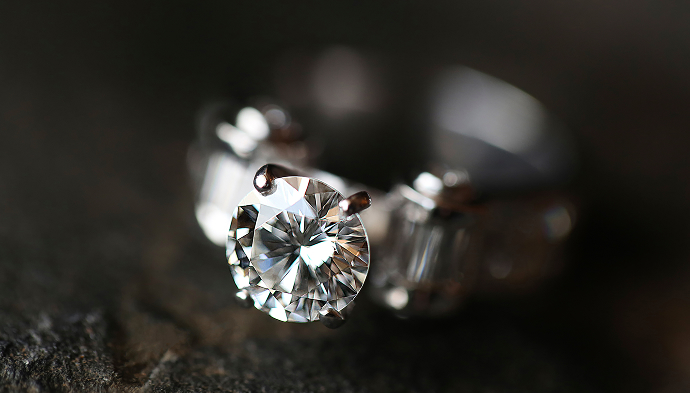
Lab-grown diamonds are engineered in such a way that they are indistinguishable from mined diamonds to the naked eye.
Since true-grown diamonds go through the same processes that mined diamonds go through, lab-grown diamonds are visually identical to mined diamonds until they are carefully analyzed in laboratories. They display the same optical, physical, and chemical properties and characteristics as mined diamonds. Trained gemologists can examine diamonds using special gem-testing equipment. Advanced scientific instruments are utilized to identify the properties of diamonds and ascertain whether they are mined or lab-grown. The properties, treatments, and processes of the diamonds can be detected by advanced analytic tools. Lab-grown diamonds are created in such a way that they are identical to mined diamonds. All certified lab-grown diamonds are inscribed so that they can be recognized as man-made and distinguished from other kinds of diamonds.
Lab-grown diamonds are certified by gemologists and institutions
All grown diamonds are accompanied by a diamond-grading certificate. Diamonds should only be sold or bought when accompanied by a certificate stating their quality. The International Gemological Institute (IGI) is an independent international diamond certification and appraisal institute. It develops a comprehensive analysis and clear documentation of diamonds. Diamond buyers rely on IGI grading reports to validate the quality of their diamonds. True-grown diamonds should always come with a certification identifying them as laboratory-grown.
So, if one were wearing a lab-grown diamond ring, would people be able to tell that it’s not a mined diamond? The answer is no. And even if people come to know, does it really matter to the wearer? The answer is negative. Recent research shows that today’s young consumers are open to alternatives and prefer options that have a low adverse effect on society and the environment. True-grown diamonds are engineered and are able to overcome these issues, making the wearer more socially and environmentally responsible.