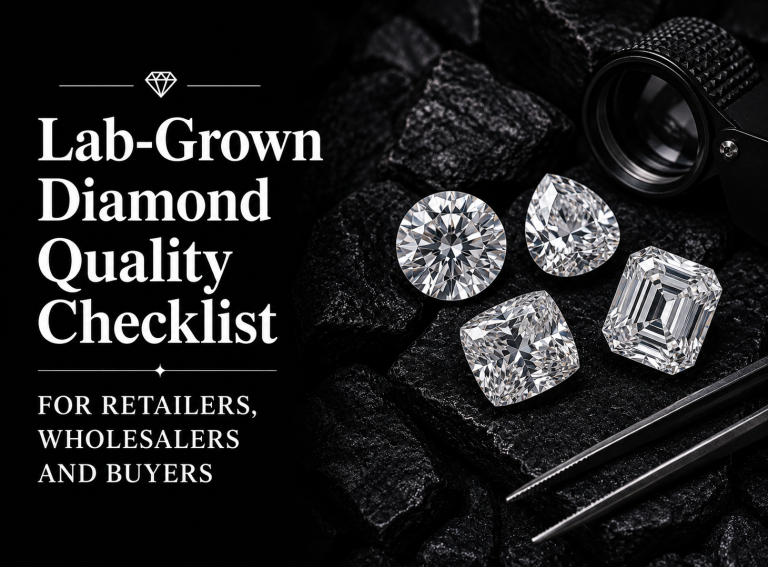
Lab-Grown Diamond Quality Checklist for Retailers, Wholesalers and Buyers


Lab created diamonds are now a serious part of the US jewelry market. But here is the problem. Most people, whether they are retailers stocking inventory or individuals making a one-time purchase, still do not know exactly what to check before placing an order. And suppliers count on that.
This checklist exists to change that. Let’s discuss it here.
Quick Quality Checklist
Before you go deeper, here is a fast reference:
- Check the 4Cs: Cut, Color, Clarity, Carat Weight
- Verify the certification (IGI or GCAL)
- Confirm the growth method: HPHT or CVD
- Inspect polish, symmetry, and fluorescence
- Evaluate the manufacturer or wholesaler directly
- Ask the right questions before you commit
Now let us go through each one properly.
Understand the 4Cs Before Buying
The 4Cs are not optional reading. They are the only objective framework for comparing lab grown diamonds across suppliers.
Cut
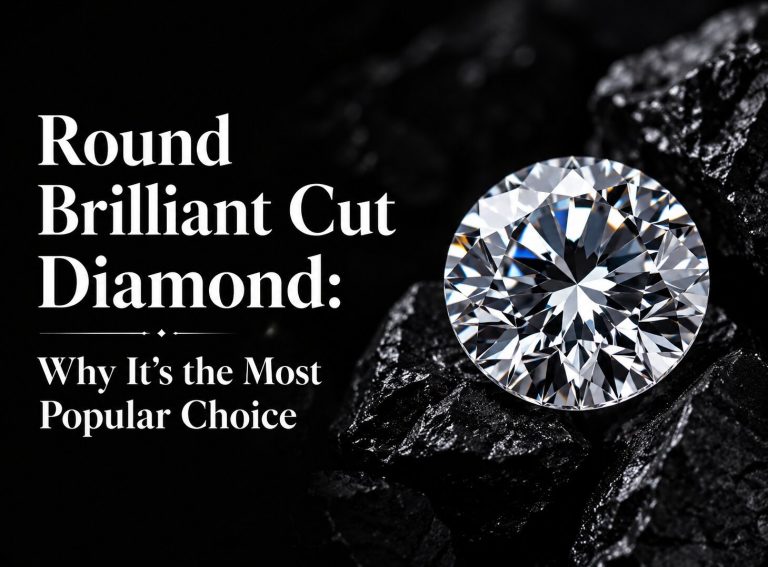
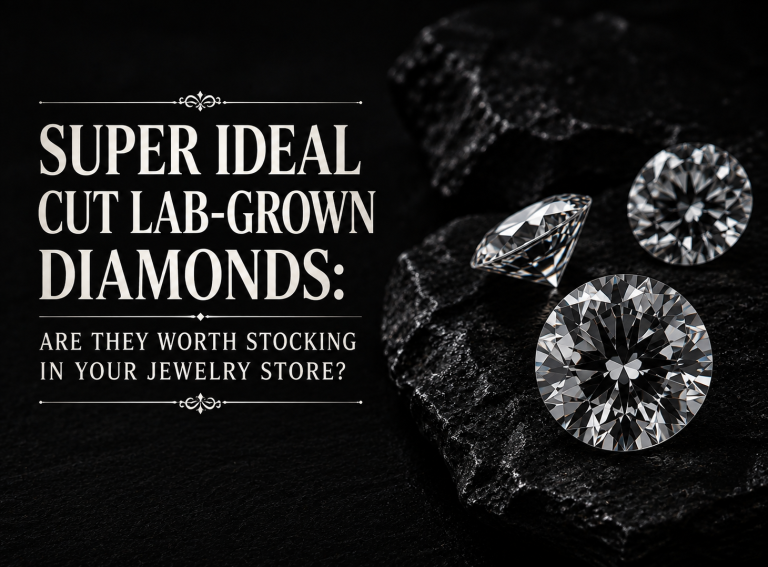
Cut decides how a diamond looks when light hits it. A well-cut lab grown diamond reflects light evenly across the whole surface. A poorly cut one looks dull. Does not matter how heavy it is or how clean the clarity grade is. For round brilliant lab grown diamonds, look for Excellent or Ideal cut grades only.
The Hearts and Arrows Diamond pattern tells you more than any certificate number. Eight clean arrows face-up, eight clean hearts face-down under a scope. That means the facets are aligned to a level of optical symmetry most commercial cuts never get close to. Not a marketing term. Actual evidence of how well the diamond was cut.
Color
Color grades run from D (completely colorless) to Z (visibly yellow). For retail purposes, G and H are the most commercially efficient grades. They appear colorless to the naked eye in most settings and cost considerably less than D through F.
Clarity
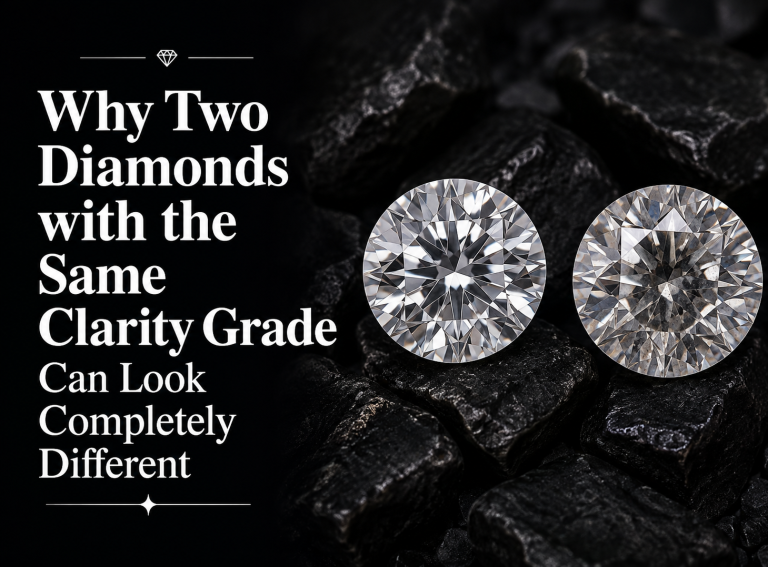
For lab grown diamonds, VS1 to SI1 is the practical range for most buyers. VS2 is widely considered the most commercially efficient grade: eye-clean across nearly all shapes, and priced below VS1 at meaningful wholesale savings. SI1 is a solid choice for round brilliant cuts where the faceting pattern masks minor inclusions naturally.
Avoid buying on ranges like “VS-SI.” Demand a specific grade on a certified report.
Carat Weight
A round cut lab grown diamond at 1.00ct will measure approximately 6.4 to 6.5mm across. Always ask for measurements alongside carat weight, because two diamonds at the same carat can look visually different depending on how they are cut.
Always Verify Diamond Certification
An uncertified lab grown diamond is a liability. The certificate is how you, and your customer, confirm what you are truly buying.
For lab grown diamonds, GCAL 8X is the most rigorous cut verification standard available today. Where most certifications grade the 4Cs on paper, GCAL 8X goes further. It measures a diamond’s actual light performance across eight optical parameters: brightness, fire, scintillation, light symmetry, optical symmetry, polish, fluorescence, and hearts and arrows pattern. Every diamond that earns the 8X grade has been verified to perform.
As of October 2025, GIA no longer grades lab grown diamonds on the full 4Cs scale. GIA now issues only Premium or Standard classifications for lab grown stones. IGI remains a widely used option, but for people who want verified optical performance rather than proportions-based grading, GCAL 8X is the stronger standard.
Always verify the certificate number directly on the GCAL website before accepting any shipment.
HPHT accounts for the premium segment of lab grown diamonds on the market today. HPHT diamonds produce D color as-grown at a far higher rate than CVD, and FL/IF clarity grades that CVD simply cannot achieve.
CVD diamonds typically require post-growth treatment and annealing to improve color, and they cannot match HPHT’s optical consistency.
So for buyers sourcing precision-cut, high-clarity diamonds, HPHT is the stronger choice.
Inspect Polish, Symmetry and Fluorescence
These three factors appear on every IGI certificate and directly affect how a diamond looks in real-world retail conditions.
Polish and symmetry should both be Excellent or Very Good. Anything below that affects light return, even in well-cut diamonds.
Fluorescence is often misunderstood. None to Faint fluorescence is neutral. Strong or Very Strong Blue fluorescence can occasionally make a diamond appear hazy under certain lighting, which is worth knowing before stocking for a high-end retail environment.
Evaluate the Manufacturer or Wholesaler
When sourcing from lab grown diamond manufacturers in the USA, the certificate tells you about the diamond. The supplier relationship tells you about consistency.
Before placing bulk orders, ask these questions:
- What growth method do you primarily use, and is it disclosed on every certificate?
- Can you provide parcel-level certificates, not batch-level summaries?
- What is your return or replacement policy on grading discrepancies?
- Do your diamonds carry IGI or GCAL certification by default?
Questions Retailers and Bulk Buyers Should Ask Suppliers
- What clarity and color ranges are you able to guarantee per lot?
- Is the growth method marked on the girdle inscription?
- Can I verify certificates individually before payment?
Common Mistakes to Avoid When Buying Lab-Grown Diamonds
- Buying on vague grades like “near colorless” or “VS-SI”
- Accepting batch certificates instead of stone-level reports
- Ignoring fluorescence until it becomes a customer complaint
- Choosing carat weight over cut quality
Who Should Use This Quality Checklist?
Retailers building inventory, jewelry brands sourcing direct, and individual buyers purchasing loose lab grown diamonds before setting. The checklist applies equally at every level of the supply chain.
Final Quality Checklist Before You Place an Order
- Confirm 4Cs on a stone-level IGI or GCAL certificate
- Verify the report number on the lab’s official website
- Check growth method: HPHT or CVD, disclosed in writing
- Polish and symmetry: Excellent or Very Good
- Fluorescence: None to Faint for premium retail
- Color: G or H for commercial lines; D through F for ultra-premium
- Clarity: VS2 or SI1 for most retail applications
Final Verdict
Lab grown diamond quality is not complicated. But it needs discipline. Most people who get burned skipped the verification step or took the supplier’s word over an actual certified report. Use this checklist every time. That lesson is not worth learning the hard way.