Why Two Diamonds with the Same Clarity Grade Can Look Completely Different


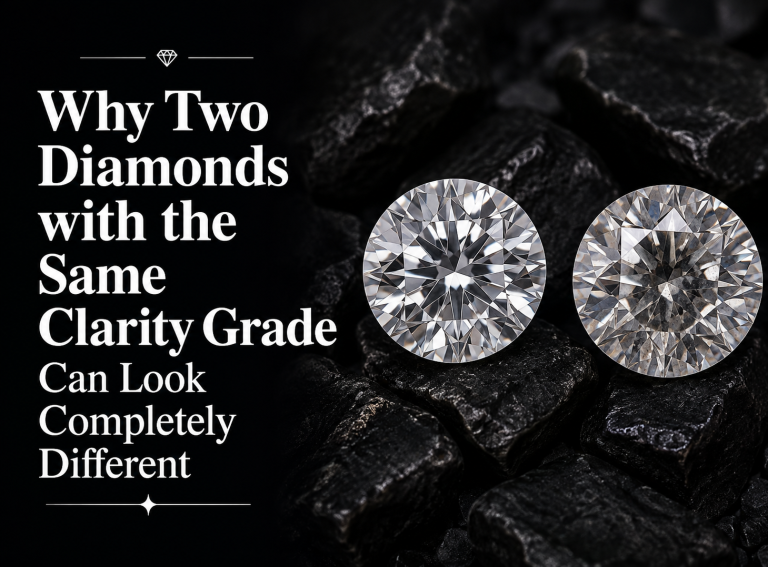
We have shown two VS2 diamonds to customers several times. Both diamonds have the grade, same lab report and similar price tag. Still one diamond looked really clean. The other one had a crystal right under the table that you could see with your naked eye.
It’s surprising that no one could explain why both certificates said the thing. This is the issue, with diamond clarity grades. We saw this problem and decided to write about it.
Why Diamond Clarity Grades Don’t Tell the Whole Story
GIA grades diamond clarity on 11 grades, FL to I3. Every diamond gets graded under 10x magnification. The final grade comes from five things: size, number, nature, location, and relief of inclusions.
Here is the problem. Two diamonds can score the same on all five and still look completely different in person. A VS2 with one small inclusion near the edge is not the same diamond as a VS2 with three inclusions bunched under the table. Even though both have the same certificate grade.
How Diamond Clarity Is Actually Graded
The GIA Clarity Scale Explained
The 11 GIA grades break into six categories:
- FL / IF: No inclusions visible under 10x. IF allows minor surface blemishes only.
- VVS1 / VVS2: Minute inclusions, extremely difficult to very difficult to find under 10x.
- VS1 / VS2: Minor inclusions, difficult to somewhat easy to see under magnification.
- SI1 / SI2: Noticeable inclusions, easy to very easy to see under 10x. Sometimes visible to the naked eye.
- I1 / I2 / I3: Obvious inclusions under 10x, often visible without magnification.
What Gemologists Evaluate During Clarity Grading
GIA graders assess five factors on every diamond. All five affect what you actually see:
- Location: An inclusion near the center of the table is harder to ignore than one near the girdle. Pavilion inclusions can mirror across facets and look like several characteristics instead of one.
- Relief: How much the inclusion contrasts with the diamond. A dark crystal catches the eye faster than a white feather at the exact same size.
- Nature: The diamond inclusion type. Crystal, feather, cloud, needle, pinpoint. Each one behaves differently under light.
- Size: Larger inclusions pull more visual weight, especially in open-facet shapes like emerald cuts.
- Number: More characteristics generally lower the grade, but one badly placed inclusion can do more damage than five small ones near the girdle.
Why Two Diamonds with the Same Clarity Grade Can Appear Different
- Inclusion Type Matters: A cloud lowers transparency without showing as one clear flaw. A needle can vanish face-up. A feather reflects or disappears depending on angle. Same diamond inclusion type, completely different appearance in a ring.
- Inclusion Size vs. Number of Inclusions: One crystal near the girdle on a VS2 can look cleaner than five small characteristics spread across the table on another VS2. Number does not decide appearance. Position and contrast do.
- Inclusion Location & Visibility: GIA confirms inclusions near the center of the table hit hardest visually. A girdle inclusion can hide under a prong. A table-centered inclusion catches light every time, no way around it.
- Inclusion Color and Contrast: Dark crystals pull the eye immediately. High contrast against the diamond body. A white feather at the same size, same position, can be nearly invisible. Diamond clarity differences between two identical grades normally come down to this one factor.
- Surface Blemishes vs. Internal Inclusions: Blemishes are external, polish marks, naturals, extra facets, sometimes removable by repolishing. Internal inclusions are permanent. When they land in high-visibility zones, they affect light performance. Certificates record both but weigh them differently in the final grade.
The Role of Diamond Cut in Hiding or Revealing Inclusions
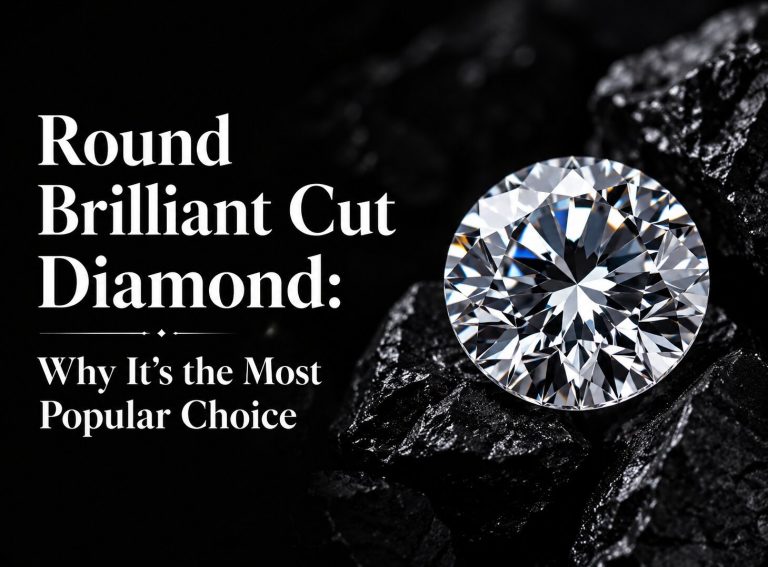
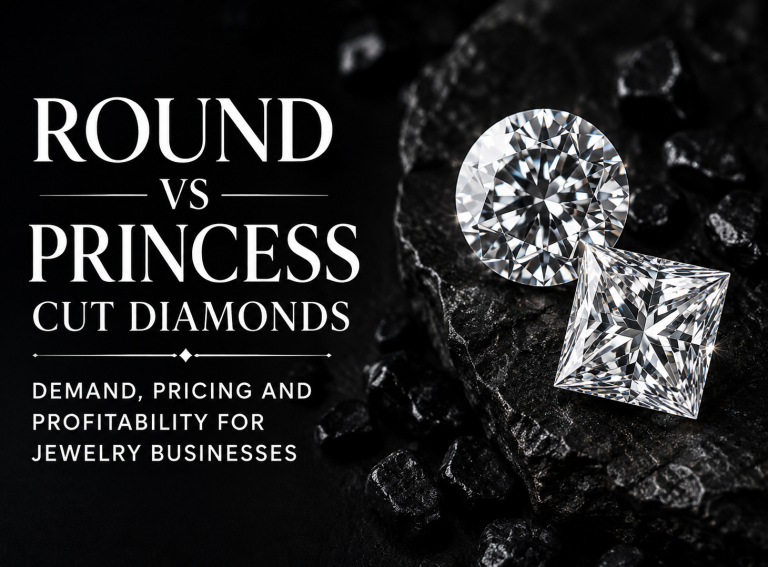
- Brilliant cuts (round, oval, cushion, radiant) scatter light across dozens of facets. A VS2 or SI1 in a round brilliant is almost always eye-clean because light never rests in one place long enough to show an inclusion.
- Step cuts (emerald, Asscher) have wide open facets with far fewer interruptions. That same SI1 that vanishes in a round brilliant can show up plainly in an emerald cut.
- Step-cut buyers should move to VS1 minimum. The open facet structure leaves nowhere for an inclusion to hide.
- Lab grown diamond clarity follows the same logic. A lab-grown SI1 in a round brilliant reads clean. A lab-grown SI1 in an emerald cut needs individual review every time before buying.
Eye-Clean Diamonds: What the Term Really Means
Eye-clean diamond is not a GIA term. It is a practical description used in the trade to mean no inclusions visible to the naked eye at normal viewing distance, roughly 25 to 30 centimeters, face-up without magnification.
At VVS and VS grades, it is nearly impossible to see inclusions with the naked eye. Even at SI1, and sometimes SI2, diamonds appear clean to the naked eye. But this is not guaranteed at SI1. It depends entirely on inclusion type, location, and contrast, not the grade alone.
How to Compare Two Diamonds with the Same Clarity Grade
Never compare two diamonds on grade alone. Two certificates at the same grade give you the category. Here is the difference.
| What to Check | Why It Matters |
| Inclusion plot on the certificate | Shows location and type of every characteristic |
| High-resolution images and video | Reveals visibility face-up that a plot cannot |
| Inclusion type noted on report | Dark crystals vs white feathers look completely different |
| Table position of inclusions | Center table inclusions are hardest to hide |
| Shape of the diamond | Step cuts reveal inclusions that brilliant cuts mask |
Common Misconceptions About Diamond Clarity Grades
Higher clarity grade always means better looking.
Not true. A well-cut VS2 with a peripheral inclusion beats a poorly cut VVS2 with table inclusions every time.
FL and IF look different from VS2 to the naked eye.
There is nothing like that. Without a loupe, you cannot tell them apart.
SI2 is always eye-clean.
It is not. Many SI2 diamonds have visible inclusions without magnification. Every diamond needs individual review at this grade.
Tips for Retailers and Jewelry Businesses When Selecting Inventory
We check inclusion plots on every diamond. Grade is one of the important factors.
- Round brilliants: VS2 and SI1 cover most eye-clean inventory at practical prices.
- Emerald and Asscher cuts: VS1 minimum, no exceptions.
Lab grown diamond clarity follows the same rules. A lab-grown VS2 in a round brilliant is almost always eye-clean. A lab-grown SI1 in an emerald cut needs individual review every time.