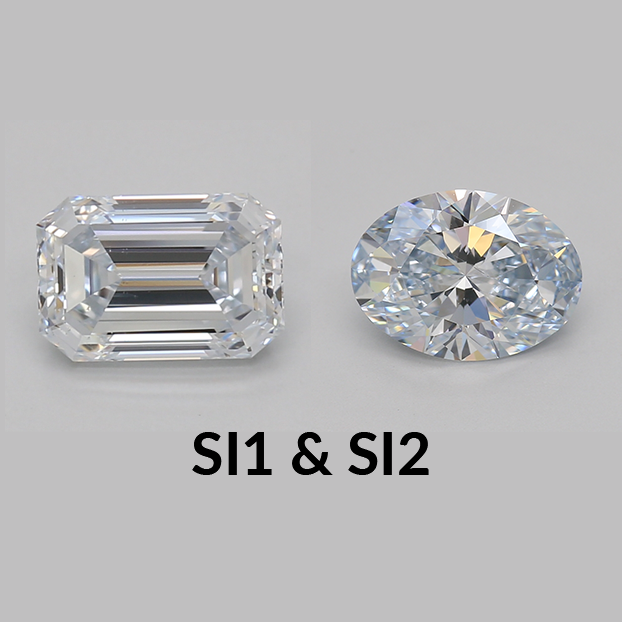
What Are SI Diamonds? Comparing SI1 vs SI2 Diamond Clarity


Are you looking to buy a diamond or an engagement ring? And are you feeling lost in the confusing diamond jargons? You must have come across terms such as SI 1 and SI 2 clarity of diamonds; and wondered what they are.
In this blog, we’ll take a comparative look at these diamond clarity grades and understand all about it.
What is Diamond Clarity?
Clarity is one of the 4Cs that is assessed when grading a diamond. Whether its lab diamonds or real diamonds, diamond clarity is measured in both cases. Clarity refers to how clear the diamonds are internally. Diamonds that have blemishes, cracks, dust, or scratches are low on clarity.
The Gemological Institute of America (GIA), grades diamond clarity and denotes it by letters. Here’s a look at the diamond clarity scale:
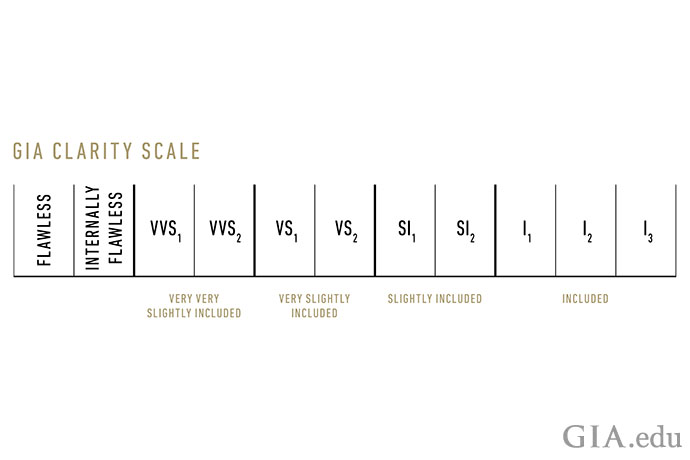
Before we get into learning about SI 1 diamonds and SI 2 diamonds, let’s understand the other gradings on the diamond clarity chart.
- Flawless: diamonds that are completely clear
- Internally flawless: diamonds that have no flaws internally
- VVS 1 and VVS 2: diamonds that are very very slightly included, which means they have very minor flaws that are visible only under strong magnification
- VS1 and VS2: diamonds that are slightly included with flaws visible under magnification
What Are SI1 and SI2 on the Diamond Clarity Scale?
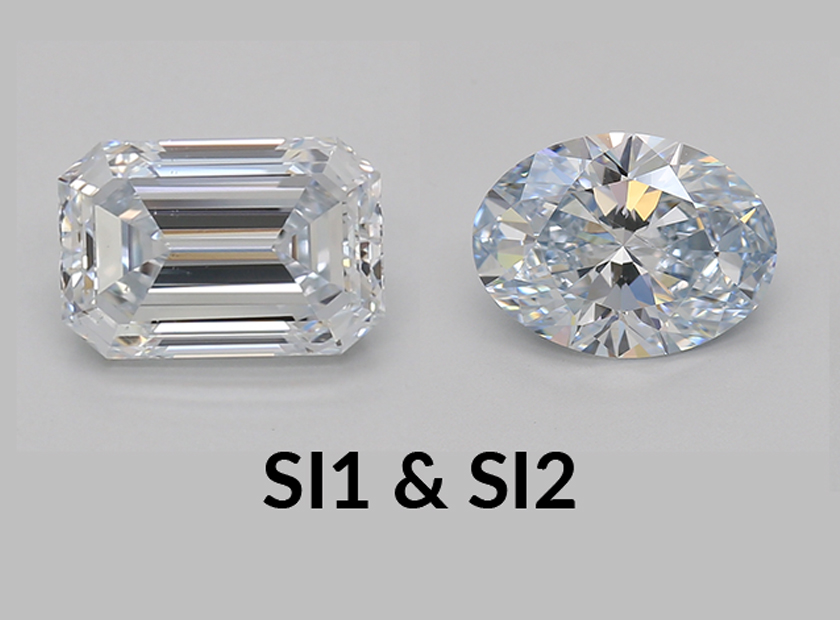
SI 1 diamonds and SI 2 diamonds are fourth on the diamond clarity scale. Both these grades have inclusions. What are inclusions? They are flaws such as cracks, scratches, dents, dust, etc.
That said, the inclusions in SI 1 diamonds and SI 2 diamonds are so minor that they aren’t visible to the naked eye. However, there are differences between SI 1 and SI 2. Let’s learn about the differences.
- SI 1 and SI 2 diamonds have different types of inclusions.
- Another difference between these two diamonds is the number of inclusions.
- SI 1 type of diamonds have fewer inclusions compared to SI 2.
- The inclusions in SI 1 diamonds are smaller than inclusions in SI 2.
Now that you know the difference between SI 1 and SI 2 diamonds, let’s discuss a bit about why you should buy these diamonds.
Why should you buy SI 1 and SI 2 diamonds?
You might wonder why you would buy diamonds with inclusions. After all, who wants to buy damaged products, right? But when it comes to diamonds, there are many different factors one needs to consider. So let’s understand why buying SI 1 and SI 2 diamonds is a good choice.
Affordability
For those who are on a budget, SI 1 and SI 2 diamonds are one of the most affordable and good quality. More importantly, buying an SI 1 diamond or SI 2 diamond can mean you can buy a much bigger size diamond at the price you’d pay for a small diamond of a grade before these diamonds on the clarity scale.
Quality
Everyone would want a flawless diamond, but they might not be easily affordable by everyone. If you consider the clarity of diamonds to make your purchase decision, you might end up shelling out a lot more than you had budgeted for.
What Should You Choose — SI 1 or SI 2?
You’ll have to consider two factors to choose between SI 1 and SI 2 — price and quality. SI 1 diamonds are more expensive than SI 2 diamonds, but they are also cleaner.
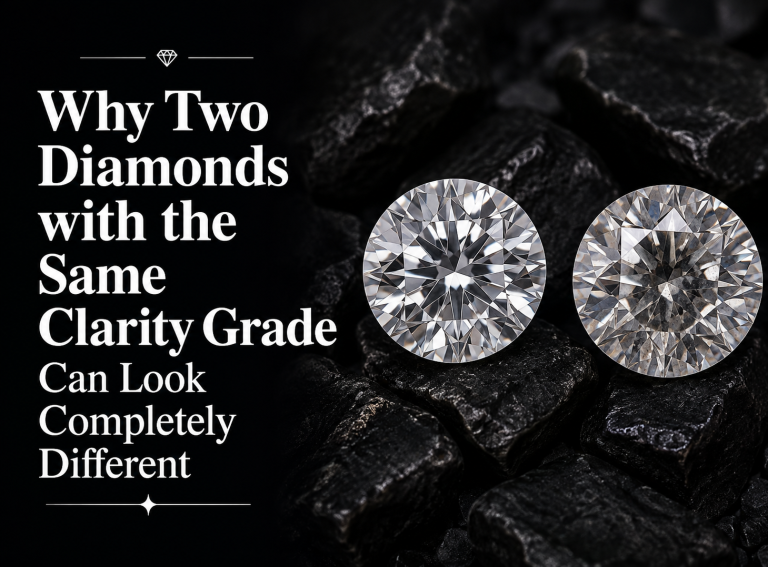
But not all SI 1 and SI 2 diamonds are equal. And so, it’s possible that some SI 2 diamonds have more visible incisions than SI 2 diamonds. Whether you go for real diamonds or synthetic diamonds, this factor will remain.
You should use clarity grades to guide you in your choice. So, when you choose diamonds, first pick those that look clean to your naked eye.
Over to You
Now that you know which of these two diamonds you should choose, you’re in a better position to make informed decisions when choosing your gemstones. Whether you go for lab diamonds or real diamonds, understanding SI 1 and SI 2 grades will help you pick the right stone.