How to Choose a Lab-Grown Diamond Jewelry Manufacturer in the USA


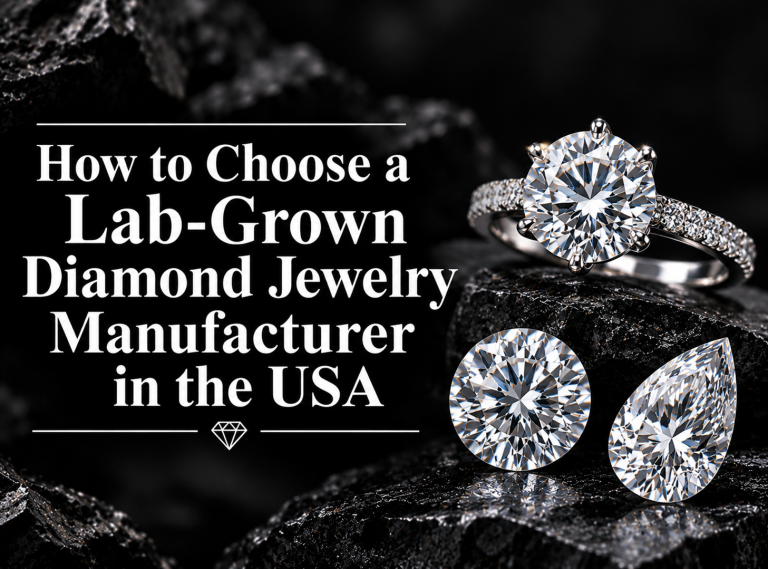
If you search for a lab-grown diamond jewelry manufacturer in the USA, you’ll find many names. But who grows the diamonds? Who cuts them? Who only sets them? These are very important things to know. In fact, in many cases, one company may do all three, and another only one.
This guide helps you sort that out, from lab reports to treatment history. It also lists what a wholesale agreement should settle.
Who Grows, Cuts and Sets Lab-Grown Diamond Jewelry
Grower, cutter or wholesaler
- A grower makes the rough diamond.
- A cutter polishes it.
- A manufacturer sets it into jewelry.
- A wholesaler resells what others made.
A few companies do two of these jobs under one roof. To confirm, before ordering, you should find out which steps run in the company’s own facility and which go to partners.
Manufacturer-direct sourcing
When you go for manufacturer-direct sourcing, you deal with the maker instead of resellers. That cuts one layer. The final price still depends on the full order, though. Your job is to put the diamond, setting, grading, shipping, insurance and returns on one sheet per supplier. This keeps your comparison fair.
Lab-Grown Diamond Certification and Report Checks
What GCAL 8X certifies and why it matters for trade buyers
GCAL 8X certification rates the cut of one diamond on eight factors. For cushions, GCAL checks outline, rounded corners, light return and the bow-tie effect. The certificate also has imaging and light performance documentation. That gives you a fair way to compare two suppliers. So you should confirm that each diamond in your order has its own certificate.
Why GIA’s lab grown grading changed in late 2025 and what to ask instead
GIA announced the change on August 27, 2025. It began on October 1. Two tiers, Premium and Standard, now replace the old color and clarity grades.
- Premium means D color and VVS or better clarity.
- Standard means E to J color and VS clarity.
That is a wide color range, so two Standard diamonds can still differ. GIA calls the paper a Quality Assessment. You should find that name on your paperwork and match the tier to your order.
Growth Method: HPHT vs CVD and What It Means for Your Orders
What to ask about treatment history before placing a batch order
When you compare HPHT vs CVD, the bigger question is treatment. GIA notes that HPHT is often used on CVD diamonds to reduce brown color. A report is a snapshot of one day. A 16.41 ct CVD diamond tested at GIA in 2022 showed no sign of treatment. That diamond returned later with signs of HPHT treatment, and it weighed 0.68 ct less. Your next step is simple. You should get a treatment statement for each batch.
Why D color as-grown matters for colorless inventory
A D color diamond is as-grown when the color comes from growth alone. That is uncommon in CVD. GIA says colorless CVD diamonds are normally HPHT annealed. Its 2025 lab note is called untreated colorless CVD with single-step growth rare. If you stock colorless diamonds, you should state as-grown D in your order and confirm it before shipping.
Cut Range and Shape Depth: Can They Cut What You Need
Standard shapes vs specialty cuts: what a real manufacturer stocks
A lab-grown diamond jewelry manufacturer should be able to show current stock by shape and size in millimeters. A fancy shape gets no GIA cut grade. GIA checks polish and symmetry instead, and Standard allows Good symmetry there. GCAL 8X reached ovals and princess cuts in 2022. The cushion grade followed in May 2026. Your comparison should cover finish grades and millimeter sizes for each shape.
Portuguese cut lab grown diamonds and why cut depth signals manufacturing capability
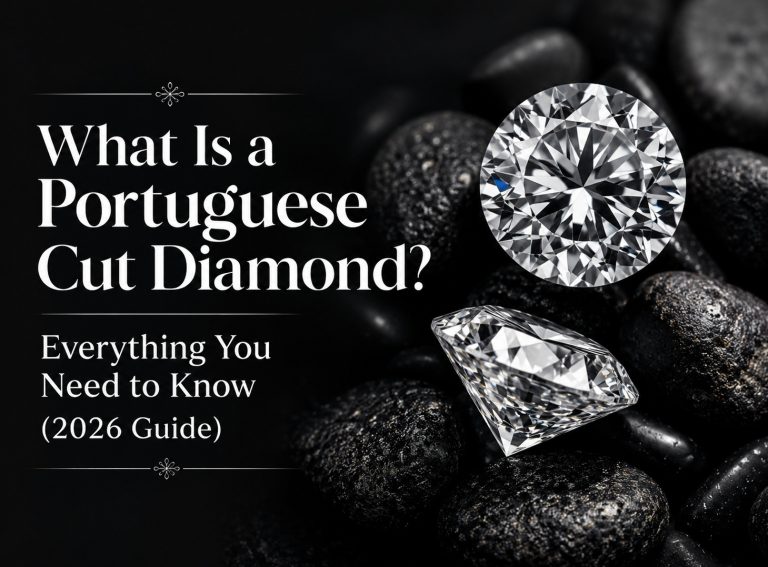
When you source Portuguese cut lab-grown diamonds, the quoted facet count varies widely. A deep pavilion adds weight below the surface. So a diamond can face up smaller than its carat weight suggests. That is why you should compare depth and millimeter size on every diamond. A supplier that cuts its own diamonds can share both figures.
Talk to Grown Diamond Corporation About Your Next Lab-Grown Diamond Order
Grown Diamond Corporation grows HPHT diamonds and runs manufacturing facilities in Surat. We supply trade partners who want to verify the grown diamond jewelry they order. Use this table as your checklist before the next order.
| What you are checking | What you should receive |
| Production steps | A list of steps run in-house |
| Lab documents | A lab document for each diamond |
| Treatment | A treatment statement for each batch |
| Shapes and depth | Stock sizes in millimeters |
| Terms | Minimums, returns, payment and delivery dates |
Send us your shape list and carat range. Our team will walk you through the lab documents and growth details. Then you can talk terms for your wholesale agreement. We do not publish minimums or lead times, so you should contact our team for both.