Crystal Structure Differences: Lab Grown vs. Natural Diamonds


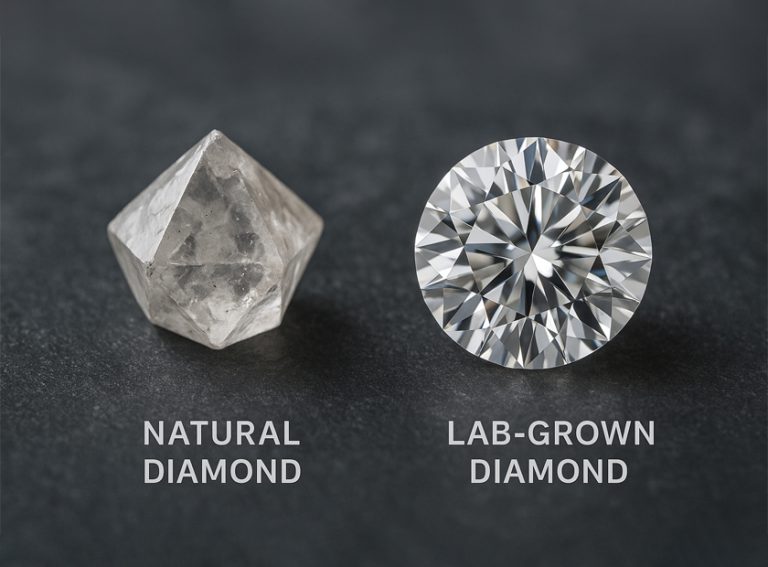
There has always been a debate between lab grown vs natural diamonds. Consumers are curious to know more about lab grown diamonds, the differences between the two, the chemical and crystal structure, and more.
In this blog, we take you through the crystal structure differences of lab grown diamonds and mined diamonds
Lab grown diamond vs. mined diamond: Formation processes and their impact on structure
Mined diamond formation
Mined diamonds are formed inside the Earth’s crust. They are formed as a result of extreme pressure and temperature conditions that occur naturally. These conditions also take millions to billions of years, which allows carbon atoms to slowly combine and arrange into a diamond crystal structure.
Moreover, unlike lab manufactured diamonds, mined diamonds may have varying properties in one diamond because different parts of the diamond have different crystal formations due to varying conditions. The result: growth in different sections, and hence, different crystal structures within one stone.
Some factors that affect the mined diamond crystal structure are:
-
The time frame
-
Fluctuations in temperature and pressure
-
The presence of trace elements
-
Interactions with elements in the environment
Lab grown diamond formation
Lab made diamonds are created using two methods: High Pressure High Temperature (HPHT) and Chemical Vapor Deposition (CVD). Each method gives the diamonds different structural characteristics.
The HPHT method leads to uniform crystal structure and fewer inclusions compared to natural diamonds. In the CVD diamond process, the layer by layer deposition allows control over crystal orientation. This leads to diamonds with superior structural perfection compared to natural diamonds.
Structural differences between lab grown vs. natural diamonds
| Lab Grown Diamonds | Natural Diamonds | |
| Impurities and inclusions | CVD lab diamonds have low nitrogen content and hence low impurities. HPHT diamonds contain metallic inclusions. | Natural diamonds have more impurities due to the high nitrogen content. |
| Growth patterns | Lab grown diamonds usually have a uniform growth pattern because of the controlled growth environment in laboratories. | Natural diamonds usually have complex growth patterns that result from changing environmental conditions during formation |
| Luminescence properties | Lab created diamonds display different fluorescence characteristics depending on their formation method. | Mined diamonds display blue fluorescence under ultraviolet light due to nitrogen-related defects. They also have varying intensities and distribution patterns. |
| Thermal and electrical properties |
Lab diamonds are made in controlled environments and hence can have can create semiconducting properties that differ from the insulating behavior of mined diamonds. |
Natural diamonds with higher nitrogen content may exhibit slightly different thermal conductivity compared to ultra-pure lab grown diamonds. |
How the crystal structural properties of lab diamonds and mined diamonds impact its application
Jewelry
Lab grown diamonds have more structural clarity and fewer inclusions. This makes them more attractive for use in making jewelry. Their superior optical performance lends them well for different kinds of jewelry pieces.
However, natural diamonds are also preferred for making jewelry for their rarity and natural properties. Mined diamonds are sought after for their unique inclusions that allow one of a kind jewelry pieces.
The jewelry industry gives a lot of weightage to high quality diamonds without inclusions and with superior performance, making lab grown diamonds a preferred option.
Industrial
Lab manufactured diamonds are more suitable to industrial applications because they allow production with specific properties and orientations. This makes it more useful for specific industrial applications. Also, the ability to control imperfections and impurities in lab diamonds leads to more predictable performance when used in industrial applications.
Summing up
While the lab grown vs. natural diamond debate will probably continue, we’ve explained what the differences are. There are significant differences, which make lab grown diamonds more favorable than mined diamonds, for different purposes.If you’re looking to purchase GIA certified lab manufactured diamonds, explore the vast lab diamonds available at Grown Diamond Corporation.
People Also Read
- Brilliant Cut vs Crushed Ice Lab Grown Diamonds: A Comprehensive Guide
- A Comprehensive Guide to Elongated Cushion Cut Diamonds
- Why Lab Grown Diamonds Proportions Matter
- Lesser-Known Facts About the Kohinoor Diamond
- Lab Grown Black Diamonds and Carbonados: Where and How to Buy