Simulated Diamonds vs Synthetic Diamonds – Meaning, Guide and Key Differences


Quick Summary
-
Simulated diamonds are not real diamonds they only look like diamonds (e.g., cubic zirconia, moissanite).
-
Synthetic diamonds (lab-grown diamonds) are real diamonds made in a lab with the same properties as natural diamonds.
-
If you want authenticity + durability, choose synthetic diamonds
-
If you want low-cost fashion jewellery, choose simulants
What Is a Diamond Simulant?
Definition: Diamond Simulant
A diamond simulant is a gemstone designed to imitate the appearance of a real diamond but is made from entirely different materials.Diamond simulants are made from different materials and do not share the same chemical structure as diamonds.
Common Diamond Simulants
-
Moissanite
-
White Sapphire
Also read –
Cubic Zirconia vs. Moissanite – Comparison and Buying Guide
Lab-Grown Moissanite Vs. Lab-Grown Diamond
Key Characteristics
-
Looks like a diamond but not chemically the same
-
More affordable than real diamonds
-
Used in fashion jewellery
-
Lower durability than diamonds
Important: A diamond simulant is not a lab-grown diamond and not a real diamond.
What Are Synthetic Diamonds ? (Lab-Grown Diamonds Explained)
Definition: Synthetic Diamond
A synthetic diamond is a real diamond created in a laboratory using advanced technology. Synthetic diamonds have the same chemical, physical, and optical properties as natural diamonds.
How Synthetic Diamonds Are Made
Synthetic Diamonds are made using the following process:
These processes replicate how diamonds form naturally underground.
Key Characteristics
-
Same chemical composition (carbon)
-
Same hardness (10/10 Mohs scale)
-
Same brilliance and optical properties
What Is the Difference Between Simulated and Synthetic Diamonds?
A simulated diamond is a material that mimics the appearance of a diamond but does not have the same chemical or physical properties. A synthetic diamond, also known as a lab-grown diamond, is a real diamond created in a laboratory with the same composition, hardness, and brilliance as natural diamonds.
Comparing & Understanding the 3 Types of Diamonds
Natural vs Synthetic vs Simulated Diamonds
|
Feature |
Natural Diamond |
Synthetic Diamond (Lab-Grown) |
Simulated Diamond |
|
Origin |
Mined from earth |
Created in lab |
Manufactured imitation |
|
Composition |
Carbon |
Carbon |
Non-carbon materials |
|
Hardness |
10 (Mohs) |
10 (Mohs) |
6–9 (varies) |
|
Value |
High |
Moderate |
Low |
|
Authenticity |
Real |
Real |
Not real |
|
Examples |
Mined diamonds |
CVD, HPHT diamonds |
CZ, Moissanite |
Key takeaway:
-
Natural + Synthetic = Real diamonds
-
Simulated = Diamond lookalikes
Also Read : Differentiate Between Lab Grown vs Natural Diamond
Get Free Access To Inventories Here – Register
Synthetic Diamonds vs Simulated Diamonds (Comparison Table)
|
Feature |
Synthetic Diamond |
Diamond Simulant |
|
Real diamond? |
Yes |
No |
|
Composition |
Carbon |
CZ, Moissanite, etc. |
|
Hardness |
10 |
6–9 |
|
Durability |
Lifetime |
Limited |
|
Certification |
GIA / IGI |
Not applicable |
|
Price |
Mid-range |
Very low |
|
Resale Value |
Moderate |
Minimal |
Get Free Access To Inventories Here – Register
Durability & Lifespan Comparison
|
Material |
Mohs Hardness |
Daily Wear Suitability |
|
Diamond (Natural & Synthetic) |
10 |
Excellent |
|
Moissanite |
9.25 |
Very good |
|
Cubic Zirconia |
8–8.5 |
Moderate |
Do simulated diamonds last?
They can last for years, but they scratch and lose brilliance over time.
Ethical & Environmental Impact
Why Buyers Prefer Synthetic Diamonds
-
No mining required
-
Lower environmental impact
-
Conflict-free sourcing
-
Sustainable alternative
Simulated Diamonds
-
Also eco-friendly
-
But lack long-term value
Trend Insight:
Modern buyers increasingly prefer lab-grown diamond jewellery for sustainability + authenticity.
Also read – Environmental Impacts Of Diamond Mining
How to Choose Between Simulated and Synthetic Diamonds
Choose Simulated Diamonds If:
-
Budget is under 10K
-
Jewellery is for short-term or fashion use
-
Authenticity is not important
Choose Synthetic Diamonds If:
-
You want a real diamond
-
Buying for engagement or wedding
-
Need durability for daily wear
-
Care about sustainability
How to Tell if a Diamond Is Simulated or Synthetic
At-Home Indicators
-
Fog test (temporary indicator)
-
Weight differences (CZ heavier)
-
Sparkle pattern
Professional Verification
-
Certification (GIA / IGI)
-
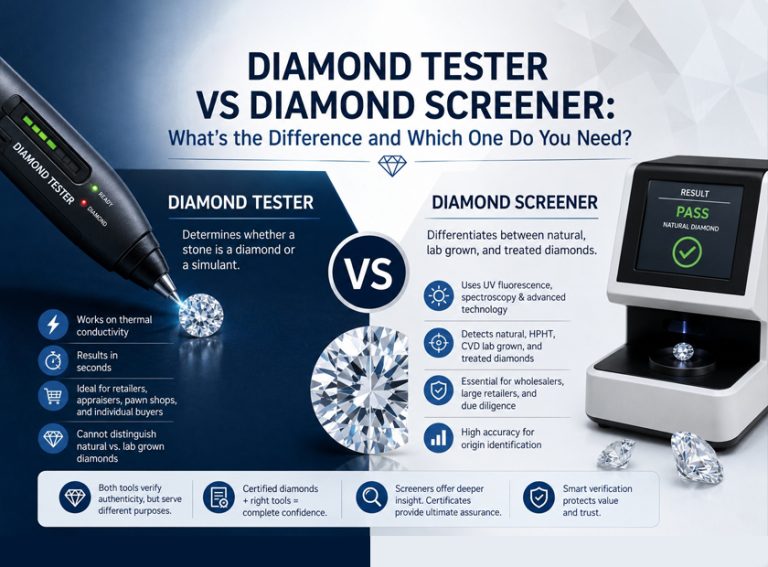
Thermal conductivity test
-
Expert jeweller evaluation
Best practice: Always ask for a grading certificate.
Best Practices to Buy Synthetic Diamonds
-
Understand simulated vs synthetic difference
-
Verify certification (GIA / IGI)
-
Check cut, clarity, color, carat
-
Avoid unclear product labeling
If you’re looking for authentic, sustainable, and high-quality diamonds, explore premium lab-grown diamond and jewellery collections from Grown Diamond Corporation and make a confident, informed choice.
Get Free Access To Inventories Here – Register
Related Searches
simulated diamond meaning | what is a diamond simulant | simulated vs synthetic diamonds | are simulated diamonds real | diamond simulant vs lab grown | artificial diamonds vs real diamonds | lab grown vs synthetic diamonds | imitation diamonds meaning