The Different Types Of Lab-Grown Diamonds : Synthetic and Manufactured


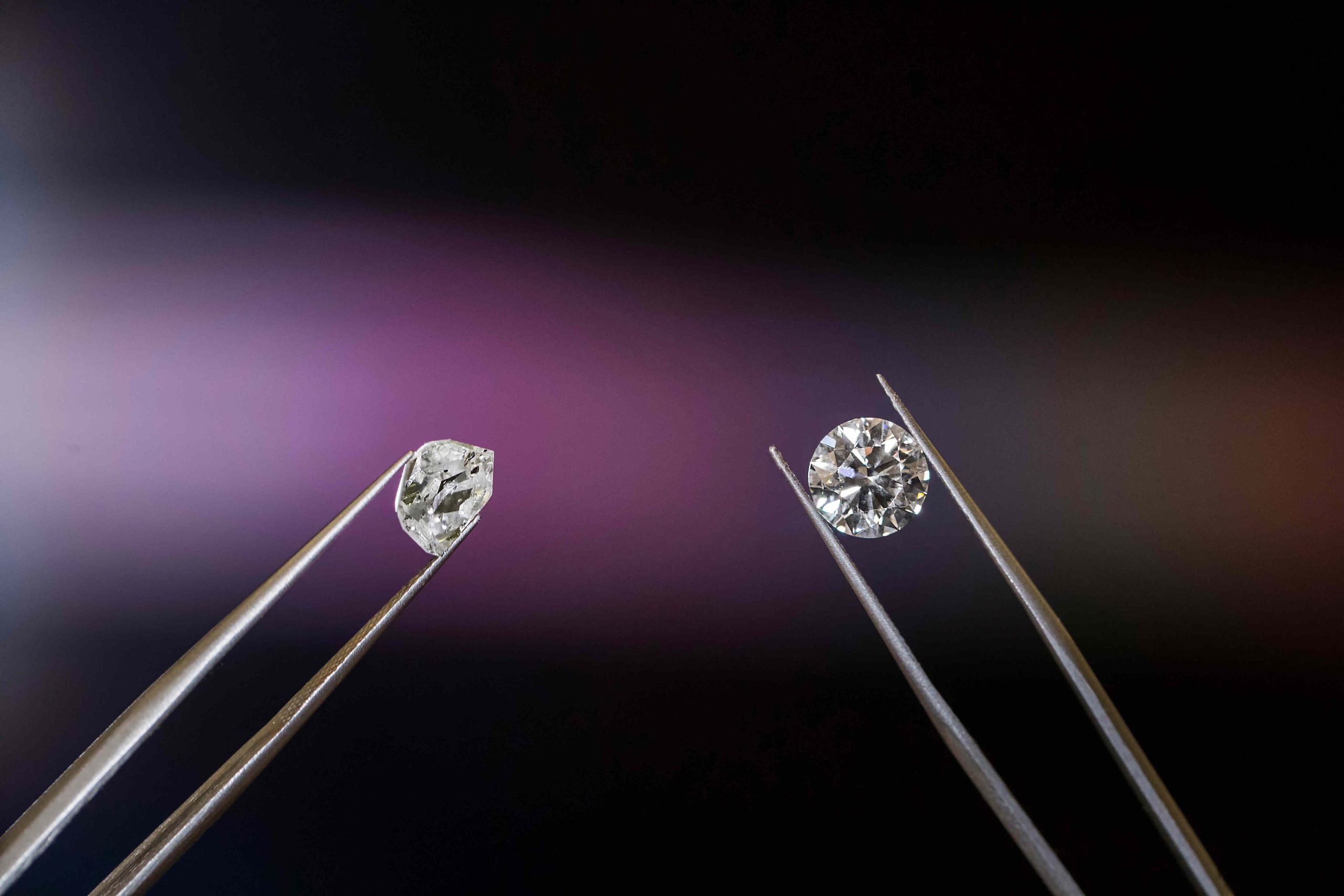
Lab-grown diamonds are the next big thing in the jewelry world that is gaining persistent importance on all fronts. The key feature of a lab-created diamond is its potential to be available in all seasons as they are generated in labs that do not need a certain environment for their growth. The labs also have the ability to produce Type II A diamonds manually. Type II A diamonds are the diamonds that qualify as a high class of diamonds; Cullinan, Kohinoor, and Lesedi La Rona to name a few. Lab-created diamonds are of various types; although, they still haven’t been able to replicate all the natural diamonds.
What Are the Different Types of Lab-Created Diamonds
There are two main types of lab-created diamonds:
- Simulant diamonds.
- Cultured diamonds
Let’s take a closer look at them and also the subtypes:
Simulant diamonds
Simulant diamonds come closest to representing natural diamonds, the difference is probably not visible to the naked eye. The simulant diamonds are chemically and physically different from the mined diamonds. These diamonds are made from alternate materials and aren’t particularly created from scratch. They were first made in the 1970s as a replacement for the natural diamonds in the Victorian age. Cut glass, zircon, and white sapphires were used to make the lab-grown diamonds.
Why simulants are not chemically diamonds
Simulants are made of different materials compared to mined or lab grown diamonds. While mined or lab diamonds are made of carbon, simulants like cubic zirconia are made of zirconium dioxide and moissanite is made of silicon carbide.
Because of these chemical differences, simulants do not share the same atomic structure as a real diamond. Although diamond simulants look similar, they are chemically different, and hence, they only look like diamonds, but are not diamonds.
Visual differences under magnification
Here are some differences of simulants under magnification:
- Cubic zirconia appears perfect because it does not the growth-related inclusions found in diamonds
- Moissanite displays double refraction. The back facets appear doubled, something that never happens in diamonds.
- Simulants display different light dispersion patterns.
- Zirconia is softer and hence might scratch over time, unlike diamonds that are harder.
Related Article : Lab Grown VS Natural Diamonds
1. Diamond Nexus Stimulants
Diamond Nexus simulant diamonds are produced from carbon mixed with additional ingredients. These stimulants have a triple lifetime guarantee due to their extreme durability. Here are some key factors related to durability, usage, and longevity.
- Excellent scratch resistance (9.5 on Mohs scale)
- Superior longevity
- Premium simulant priced higher than standard cubic zirconia, lower than mined diamonds and lab grown diamonds
- Suitable for daily wear as well as occasional wear
2. Cubic Zirconia Stimulants
These cubic zirconia simulant diamonds are produced from zirconium dioxide. They are the least durable type of stimulant diamonds, and they also come at the lowest price. Here are some factors related to durability, usage, and pricing.
- Moderate scratch resistance (8-8.5 on Mohs scale)
- Limited longevity as it is prone to scratching, cloudiness and color change
- Price is low and makes it the most affordable diamond alternative
- Not recommended for daily wear but good for occasional wear
3. Mossianite Lab created gemstones
These lab-produced stones are synthesized from silicon carbide. Moissanite is a very strong simulant and this adds to its price, which is quite high as well. Moissanite has a different look as it is a gemstone. Here are some factors related to durability, usage, and pricing.
- Excellent scratch resistance (9.25 on Mohs scale)
- Exceptional longevity
- Mid to premium prices, higher than cubic zirconia, lower than mined or lab grown diamonds
- Suitable for daily wear and occasional wear
Cultured diamonds
Cultured diamonds are created from scratch and built in an environment that represents the environment in the diamond mines. These diamonds are grown in a lab and have very similar physical and chemical characteristics to those of natural diamonds.
Why are cultured diamonds real diamonds
Cultured diamonds or lab grown diamonds are chemically, physically, and optically identical to mined diamonds, hence they are real diamonds. Both the types of diamonds are made of pure carbon atoms in the same structure, making them hard and durable. Both have the same refractive properties, durability, and sparkle. Cultured diamonds are inscribed with a serial number on the girdle. This inscription is the identification of the diamond. It helps with traceability and authentication.
Lab-cultured diamonds are created in two ways, as stated below.
1. HPHT diamonds
High pressure high temperature diamonds are made in an environment that is similar to the environment favourable for the production of mined diamonds. There are three main press designs that are used to supply the pressure and temperature required to produce synthetic diamonds. They are the cubic press, the split-sphere press, and the belt press. Diamond seeds are placed at the bottom of the press.
HPHT – Higher Control Process
The HPHT process is superior and known to create high-quality diamonds. They display exceptional color control and purity. The HPHT process replicates the natural diamond formation process, which leads to fewer imperfections. The process creates Flawless (FL) and Internally Flawless (IF) diamonds.
HPHT – Jewelry Applications
HPHT diamonds are widely used in premium jewelry owing to their superior quality. They are used for engagement and wedding rings, occasion wear jewelry, such as bracelets, earrings, pendants, and more. They are identical to mined diamonds and hence used for traditional jewelry designs as well.
The HPHT process of manufacturing diamonds is highly suitable for commercial-scale production. The process allows for better control and hence leads to superior quality lab grown diamonds.
2. CVD diamonds
Lab-made diamonds are grown from a hydrocarbon gas mixture in the chemical vapour deposition method. This method is considered to be the more suitable choice for industrial applications, because of its flexibility, and the simplicity of the process. This is the reason why it is gaining popularity in laboratory research. HPHT still remains to be the preferred process for the mass production of diamond crystals. The CVD diamond growth enables the growth to happen over various substrates and large areas. It also improves the control over the chemical impurities.
CVD Process – Purity Control
The CVD process involves growing diamonds atom by atom in a controlled gas chamber. The process enables manufacturers to regulate various elements and produce diamonds with minimal inclusions. The layer-by-layer deposition allows real-time monitoring.
CVD High-Clarity Diamonds
The CVD process creates high-quality diamonds ranging from IF to VVS (Very Very Slightly Included) on the clarity scale. Its higher control process leads to fewer structural defects and inclusions.
CVD Use In Jewelry
CVD diamonds are often used in haute couture pieces, designer clothing and jewelry, and engagement rings. CVD diamonds are also valued for their superior thermal conductivity, optical transparency, among other properties. CVD diamonds can also be used for industrial applications.
Wrapping up
To sum it up, there are two main distinctions of lab-produced diamonds which cover the umbrella of several other types of diamonds that are made in labs. Even after being produced in a lab-generated environment the diamonds hold a very similar state of quality as the mined diamonds!
Customers who want the maximum value and affordability for larger carat weight diamonds should buy HPHT lab grown diamonds. Those who want high clarity could also go for CVD lab diamonds.
Lab grown diamonds are real diamonds, ethically made, and offer multiple benefits. If you’re looking to buy the best quality lab grown diamonds made with HPHT technology, explore Grown Diamond Corporation.
People Also Read : Different Types Of Diamonds : Based on different factors