Understanding Lab Grown Diamond Necklaces: A Complete Guide


Diamond necklaces are one of the best accessories that make a statement.
While it may not be easy for everyone to buy a real diamond necklace, lab grown diamond necklaces are easily accessible to all.
Lab grown diamond necklaces are created with man made diamonds, which are affordable, sustainable, and have many other benefits.
In this blog, you will learn all about lab grown diamond necklaces, types of diamond necklaces, how to select, and more.
How lab create diamond necklaces differ from natural diamond necklaces
Here are some factors that help understand how lab grown diamond necklaces are different from natural diamonds.
|
Lab grown diamond necklace |
Natural diamond necklace |
|
|
Origin |
Created through scientific methods in laboratories. |
For naturally under the Earth’s surface. |
|
Formation method |
Created using two methods: High Pressure High Temperature (HPHT) and Chemical Vapor Deposition (CVD) |
Formed through natural processes under the Earth’s surface, involving pressure, temperature, and chemical processes. |
|
Purity |
Does not contain impurities as it is made through controlled processes. |
May contain gases and chemicals, such as nitrogen, boron, and other impurities. |
|
Cost |
30 to 50% cheaper than natural diamonds and hence, more affordable. |
Highly priced due to the extraction process and hence, not accessible to all. |
|
Customization |
Can be customized for carat weight, color, and clarity. |
Cannot be customized for carat, color, and clarity, as it is formed naturally. |
Why are lab grown diamonds used in fine jewelry?
-
Lab created diamonds appeal to customers for their ethical considerations. Lab diamonds follow ethical practices, avoid environmental harm, and maintain supply chain transparency.
-
Lab grown diamonds are cost effective and hence cheaper than natural diamonds, making them a preferred choice for lab diamond necklaces and other jewelry.
-
Creating diamonds in labs can ensure consistency and higher quality compared to natural diamonds, making it easier to use lab diamonds for mass jewelry production.
-
Customization is possible in lab diamonds, hence, jewelers, retailers, and designers can custom make them for color, clarity, and carat weight to make identical jewelry pieces. For instance, a matching lab created diamond necklace and earrings set.
-
The environmental impact of man made diamonds is much less compared to mined diamonds and hence, an increasing number of conscious consumers prefer to buy lab grown diamond jewelry.
Key factors to consider when choosing a lab grown diamond necklace
Diamond quality (The 4Cs)
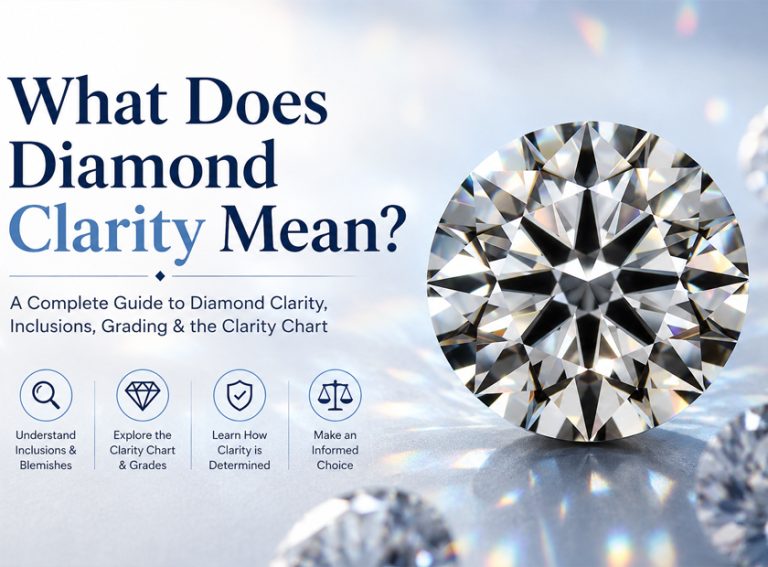
The 4Cs—cut, color, clarity, and carat weight—are the most basic parameters for grading or assessing lab made diamonds.
Clarity
Refers to the absence of inclusions or blemishes in the diamond. Clarity enables light to pass through and reflect, leading to sparkle and brilliance. If you’re looking for everyday wear lab created diamond necklaces, you can choose slightly lower clarity grades, such as VS2.
Color
Colorless diamonds are the most desirable. Lab grown diamonds are graded on the scale of D to Z, where D is completely colorless, and Z is slightly yellowish. The color of the diamond can make the necklace look smaller or bigger. Moreover, the color of the metal should also be considered when buying diamond necklaces.
Carat weight
The carat weight of a diamond is not its size, but its weight. 1 carat lab grown diamond equals 200 milligrams. Carat weight depends on various factors, such as the diamond shape, cut, and other factors.
Cut
The cut of the diamond is what gives it shape and surface finish. Cut also influences the lab grown diamond necklaces fire, brilliance, and overall performance as it impacts the way light travels through the diamond.
Lab grown diamond necklace length and style
A factor that affects the style and comfort of the diamond necklace is the length. The length has an aesthetic purpose; it has to suit the neckline and body type. Here are some lengths and styles to consider when buying a lab created diamond necklace.
1. Choker length: This one is high on the neck, emphasizes the neck and jawline. It makes a bold statement and is suited to evening wear or low necklines.
2. Princess length: One of the most popular, the princess length lab grown diamond necklace falls below the collarbone. Its length suits all necklines, making it ideal for every occasion.
3. Matinee length: It falls below the collarbone. It pairs well with crew necks and high necklines. This style works well for casual and professional attire.
4. Opera length: This is a longer style, falling below the bust. It suits evening wear and can be enhanced with a layered choker.
Here are some tips:
-
The style must match the diamond and the overall aesthetics of the piece.
-
Delicate and thin chains go well with smaller lab diamonds.
-
Larger diamonds, for instance, a 2 carat lab grown diamond necklace should be paired with heavier chains.
-
Box chains go well with contemporary designs.
-
Lab grown diamond tennis necklaces don’t have separate chains as the diamonds connect through their settings.
Metal types used in lab grown diamond necklaces
When choosing a metal, it is essential to keep a few factors in mind. From the carat 24k (pure), 18k (75% gold), and 14k (58.3% gold), to the tone of the metal and whether it balances with the skin tone and necklace design, all are important parameters to choose your metal.
1. Platinum One of the most durable metals, platinum’s white color lends well to lab grown diamond necklaces. It has a high density, which provides security for diamond settings. Platinum goes well with premium pricing of large lab created diamonds.
2. White gold
White gold looks similar to platinum but is more affordable. White gold has a plating of metals and hence requires more maintenance and careful use. However, it is still a preferred choice for lab grown diamond necklaces.
3. Yellow gold
Yellow gold has a warm visual appeal and requires less maintenance compared to white gold as it does not have plating. Lab grown diamonds with slightly warm tint, such as I-J color grades go well with yellow gold for necklaces.
4. Rose gold
Gaining popularity, rose gold is made with copper alloys and does not require any plating. It pairs well with round and cushion-cut lab grown diamonds.
Popular types of lab grown diamond necklaces
1. Solitaire lab grown diamond necklaces
Featuring a single diamond as a centerpiece, solitaire diamond necklaces are classic and versatile. These types of necklaces have one delicate diamond in a chain. They style well with casual as well as formal clothes. The design also influences how well the diamond sparkles. For instance, a four-prong setting maximizes light entry.
2. Pendant-style lab created diamond necklaces
Pendant necklaces feature a diamond pendant hanging on the chain. The pendant can have various shapes, such as heart, geometric, round, square, etc., based on the design and shape of the lab diamond. It is essential to note that the pendant is proportionate to the chain otherwise the lab grown diamond necklace can look off-balance.
3. Lab grown diamond tennis necklace
Tennis necklaces feature a continuous line of lab grown diamonds that drape around the neck. They are also called line bracelets. These types of necklaces are associated with tennis players and hence, the name. Lab grown diamond tennis necklaces are more accessible and affordable compared to natural diamond necklaces.
4. Halo and cluster necklace designs
Halo diamonds feature a center diamond and accent diamonds or smaller diamonds around it. Halo diamond necklaces can be round, oval, square, or other geometric designs. These designs can also have a cluster of diamonds at the center with small diamonds around the cluster.
5. Station and layered necklace styles
Station necklaces feature individual diamonds placed at intervals on a chain. Unlike a tennis lab grown diamond necklace, station necklace styles do not have a continuous line of diamonds, and hence, they are more affordable. The spacing, diamond size, and chain thickness have to be in balance with each other.
Certification, quality assurance, and authenticity
When buying lab grown diamond necklaces, it is essential to check the certificate for grading and authenticity. Here are some lab grown diamond grading certificates:
IGI
The International Gemological Institute (IGI) offers grading certificates for lab grown as well as natural diamonds. The institute follows a standard grading procedure for both types of diamonds.
GIA
The Gemological Institute of America (GIA) is one of the most reputed diamond grading institutes. It assesses diamonds for the 4Cs, offering a detailed report on the various characteristics of diamonds.
AGS
The American Gem Society (AGS) offers detailed grading certificates for cut grading. It uses proprietary analysis tools, offering comprehensive documentation and authentication features for lab grown diamonds and natural diamonds.
GCAL 8X
The Gem Certification And Assurance Lab grades eight different parameters of lab grown diamonds. Unlike other institutes that grade only the 4Cs, GCAL goes beyond and thoroughly examines lab grown diamonds for overall quality.
Pricing and value considerations
What factors influence the price of lab grown diamond necklaces?
-
The 4Cs grading influences lab diamond necklace price. Higher grades in cut, color, clarity, and carat increase the price.
-
The type of metal used for the lab created diamond necklace impacts the price of the necklace. For instance, 24K yellow gold costs higher than 18K gold. Moreover, the weight of the necklace or the amount of metal used also influences the price of the necklace.
-
Another factor that influences the price of lab diamond necklaces is the complexity of design. Simple designs are easier to achieve and hence cost less than complicated designs.
-
Apart from these direct influences on synthetic diamond necklaces there are indirect costs, such as the amount brands spend on marketing, supply chain expenses, and market economics, etc.
Comparing lab grown diamond and natural diamond necklace pricing
|
Factors |
Lab created diamond necklace |
Natural diamond necklace |
|
Cost |
Lab diamonds cost 30 to 50% less than mined diamonds |
Mined diamonds are significantly more expensive than lab diamonds |
|
Price difference |
Example: A 1carat round brilliant lab grown diamond in excellent cut, G color, VS2 clarity might retail for $1,200-1,800 |
Example: A 1carat round brilliant natural diamond can cost $5,000-7,000 |
|
Resale value |
The resale value of lab grown diamonds can be less and depends on various factors |
Natural diamonds have a higher resale value compared to lab diamonds |
|
Price stability |
The price of lab diamonds continuously changes based on production technology and scale |
The price of natural diamonds remain stable due to limited supply |
Care and maintenance tips for lab grown diamond necklaces
-
Regular cleaning helps preserve diamond brilliance. It removes the oils, dust, and residues.
-
Home cleaning involves warm water, mild soap, and soft scrubbing.
-
Ultrasonic cleaning offers deep cleaning through high-frequency sound waves that help release particles.
-
Professional cleaning and inspection every few months ensures beauty and proactive maintenance.
-
Storing the lab grown diamond necklace properly is essential.
-
Avoid storing multiple pieces together to avoid bruising and breakage.
-
Avoid contact with chemicals from hairspray, perfumes, cosmetics, etc.
-
Wear lab created diamond necklaces carefully to avoid chipping and scratching.
Common mistakes to avoid when buying lab created diamond necklaces
-
Avoid emphasizing too much on the lab diamond carat weight and neglecting other qualities of the diamond. A large diamond does not necessarily mean the best quality. Hence, assess all parameters of the diamond, such as color, clarity, and cut.
-
Not checking the synthetic diamond necklace certificate for grading and authenticity is another big mistake. Examining the certificate for the origin, manufacturer details, grading parameters and details is important.
-
When buying a lab grown diamond necklace, one of the most common mistakes people make is to focus more on the diamond and less on the metal. This can negatively impact the visual appeal of the necklace, the pricing, and durability.

Clicks to access to our vast inventory of lab grown diamonds
Wrapping up
Lab grown diamond necklaces have many benefits over natural diamond necklaces. From pricing to durability to variety and authenticity, owning a synthetic diamond necklace is nothing less than making a statement and supporting several good causes.
If you’re looking to purchase or customize a lab grown diamond necklace, explore Grown Diamond Corporation’s latest collection of lab diamonds and necklaces.