The Evolution of Lab Grown Diamonds: How Far the Industry Has Come by 2026


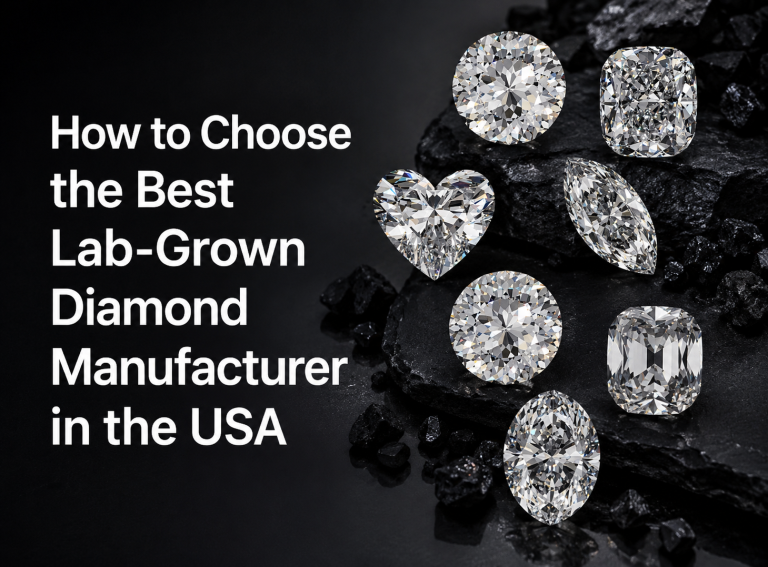
If you’re wondering what are lab grown diamonds, they are real diamonds that are created in laboratories following the same processes that form diamonds under the Earth via natural processes.
Lab diamonds have been around for more than a decade. While initially, its preference was limited, by 2026, it has turned into a growing industry, with around 20 to 25% of the overall diamond market share.
In this blog, we explore more about lab grown diamonds history, how are lab grown diamonds made, lab grown diamond price, and the future of lab made diamonds.
How are lab grown diamonds made?
Lab grown diamonds are made using two methods. Both methods replicate the processes that form diamonds under the Earth’s crust. The two methods lead to the two different types of lab grown diamonds. Let’s understand both methods.
High Pressure High Temperature (HPHT)
-
The HPHT method was developed in the 1950s.
-
In this method carbon, in the form of graphite, is put through intense pressure and high temperatures.
-
This process replicates the natural conditions in the Earth’s crust.
-
This leads to the carbon atoms rearrange into a crystal lattice structure, forming a diamond.
-
This process is carried out in a controlled laboratory environment, ensuring the production of high-quality lab-grown diamonds that are indistinguishable from natural, mined diamonds.
Chemical Vapor Deposition (CVD)
-
The CVD lab diamond making process involves placing a diamond seed in the growth chamber.
-
This chamber is then filled with carbon-rich gases, such as methane and hydrogen.
-
The next step involves introducing heat in the chamber, which leads to the process of ionization and breaking of molecular bonds.
-
Next, the carbon atoms deposit onto the diamond seed, forming a lab grown diamond.
Types of lab grown diamonds
|
Feature |
HPHT |
CVD |
|
Purity |
Type Ib or Type II |
Type IIa |
|
Color |
Excellent for fancy colors (yellow, blue, pink) |
Best for colorless/near-colorless stones |
|
Price |
Slightly lower for smaller stones |
Competitive pricing |
|
Post-growth treatment |
Requires less to no treatment |
Requires treatment to remove brown tint |
|
Fluorescence |
Display fluorescence color on their crown or pavilion |
May or may not display fluorescence color |
|
Inclusions |
Dark or opaque inclusions and exhibit a metallic shine under light. |
Have inclusions, based on the minerals part of their composition |
Key benefits of lab grown diamonds
-
One of the benefits of lab grown diamonds is its ethical sourcing. They are conflict-free and come with certificates and proof of their origin and supply chains.
-
Lab grown diamonds contribute to environmental sustainability as making them involves less land disruption, and less carbon emissions.
-
Another benefit of lab grown diamonds is its cost efficiency. Lab diamonds are priced 40-50% lower than mined diamonds.
-
Lab grown diamonds have the same physical, chemical, and optical properties as mined diamonds. Lab diamonds’ hardness measures 10 on Mohs scale, and its chemical composition is of pure carbon in cubic crystalline structure.
-
Another benefit of lab grown diamonds is its quality consistency. The way lab grown diamonds are made – with HPHT and CVD process – enable better control over color, clarity, carat weight and other specifications.
-
Lab grown diamonds provide complete traceability due to the process of documentation, certification, and reporting. One can know the history of their lab grown diamond, origin, and more.
-
Lab made diamonds are accessible to many customer segments. From Gen X to millennial to Gen Z, the lab grown diamond prices allow various consumer segments to easily purchase real diamonds.
Lab grown vs natural diamonds: Difference
While lab-created diamonds are equal to natural diamonds in many ways, such as their chemical, optical, and physical properties, there are many differences between the two. If you know how lab grown diamonds are made, you know the impact of the two diamonds. Let’s look at other differences between the two types of diamonds.
|
Aspect |
Lab grown diamond |
Natural diamond |
|
Formation |
Grown within days to weeks in laboratories |
Takes millions of years to form through natural processes |
|
Ethical issues |
Conflict-free, environmental friendly |
Can be related to blood diamonds, conflict, war, and socio-political issues |
|
Environmental impact |
Low carbon footprint, no harm to land, wildlife, lan disruption |
Higher emissions, land disruption, harm to wildlife and pollution |
|
Price |
Lab grown diamond price ranges from INR 80,000 to 2,00,000 ($900 to 1800) |
Price ranges from INR 3,50,000 to 5,50,000 ($4000 to 6500) |
|
Rarity |
Abundant, can be grown as per demand |
Scare as mining is declining |
|
Appeal |
Modern, value-driven, conscious purchase |
Traditional, sentimental, status symbol |
The cost and pricing of lab grown diamonds
-
India is one of the largest manufacturers of lab grown diamonds. And hence, India offers competitive lab grown diamond prices.
-
Round brilliant cut diamonds of VS1-VS2 clarity and E-F color grade, the price ranges between INR 35,000 to 55,000 (for 0.50 carat).
-
For a 1.5 carat lab grown diamond, the price ranges between INR 80,000 to 1,50,000.
-
A 3 carat lab diamond can cost INR 2,20,000 to 3,80,000.
-
Fancy color lab grown diamonds are priced higher. For example, a 1 carat fancy vivid blue lab grown diamond ranges between INR 3,50,000 to 5,00,000.
Use cases and applications of lab grown diamonds
-
Engagement and wedding rings: Studies show that 40% of millennial and Gen Z couples prefer to buy lab grown diamond rings for engagements and weddings.
-
Fashion jewelry: Because of the many benefits of lab grown diamonds, such as easy availability, ability to customize, lab diamonds are a popular choice for fashion jewelry.
-
Anniversary gifts: Due to the affordability factor, lab diamonds are a common anniversary gift, whether it is a wedding or work milestone.
-
Industrial applications:Lab grown diamonds are widely used in the manufacturing industries, such as surgical equipment, cutting tools, electronics, etc., because of their high purity.
-
Sustainable luxury: Conscious consumers who prefer to choose environmental and ethical products value lab grown diamonds over mined diamonds. Moreover, lab grown diamond prices are lesser than mined diamonds.
The future of lab grown diamonds
1. Technological breakthroughs
Lab grown diamond technology continues to evolve. Experts keep on researching and experimenting to find new or enhance existing methods to manufacture better quality lab grown diamonds. These new technological breakthroughs could make the diamond manufacturing process faster and also reduce lab grown diamond prices.
2. Accelerating market growth
Lab grown diamonds are expanding their growth by market penetration. While current reports suggest lab diamonds make up 25 to 30% of the total diamond industry, future projects suggest they could capture 40 to 50% of the global diamond market by 2030.
3. Market segmentation
While the market sentiment for lab grown vs natural diamonds has been all about competition, increasingly this sentiment is changing. Rather than competition, the two types of diamonds will be segmented based on their uses and applications. For instance, lab grown diamonds will be useful for fashion, luxury, jewelry, and practical uses, while natural diamonds will be used for ultra-luxury and traditional investments.
4. Evolving regulatory standards
The regulatory standards and framework for the manufacturing, use, and application of lab diamonds keeps evolving in different regions and countries. For instance, the terminologies, such as synthetic, lab grown, etc. are evolving, making lab grown diamonds more acceptable and accessible.
Summing up
The diamond industry has come a long way from lab grown diamond history to carving a space for the future of lab grown diamonds. From technological advancements to manufacture better lab diamonds to expanding industrial applications to accessible lab grown diamond pricing, there’s a lot to look forward to in the lab grown diamond industry. If you’re a retailer, jeweler, or designer looking for the best quality lab grown diamonds, explore Grown Diamond Corporation.