What Are Diamond Facets And Meaning


When looking to buy the best lab grown diamonds, there are a few things everyone wants: sparkle and brilliance. While sparkling diamonds that display brilliance look attractive and appealing, have you ever wondered why some lab grown diamonds have more brilliance and some have less? And why do some diamond shapes sparkle more than the others?
It’s because of the way the diamond facets are cut. In this blog, we tell you all about diamond facets and how they affect the brilliance and sparkle of diamonds.
Read on!
Why do some diamonds sparkle more than others?
What makes a diamond sparkle?
The sparkle of diamonds comes from how well its facets are cut. Two diamonds of the same carat weight placed side by side might sparkle differently. And the reason boils down to the way their facets are cut.
Diamond facets are flat surfaces on all sides of the diamond that enable light to enter the diamond and reflect brilliance. Facets also create rainbow flashes often seen on diamonds. The ways facets are cut, positioned, their proportions, symmetry, and consistency are key factors that lend diamonds its sparkle.
Diamonds that have facets that are well cut sparkle more than those that have poor facet proportions, cuts, and finish.
In simple terms: diamond sparkle is a result of how light enters, reflects inside, and exits the diamond through its facets.
What are diamond facets?
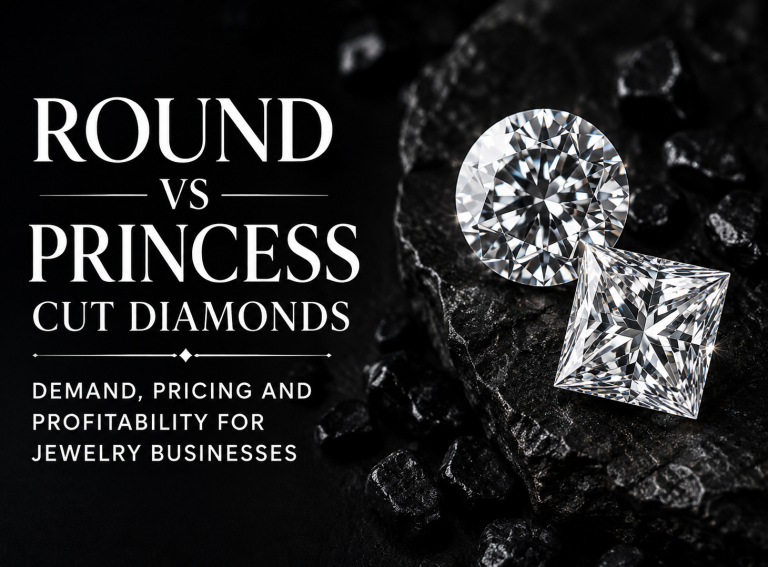
Diamond facets are flat, small, polished surfaces that are on the crown and pavilion of diamonds. Facets are formed when lab grown diamonds are cut. The role of diamond facets is to reflect light and lend brilliance and sparkle to diamonds. Hence, the cut quality and arrangement of facets have a huge effect on diamond appearance and performance. Diamond diamond cuts (diamond shapes) have different numbers of facets. A round brilliant lab grown diamond has 58 facets. And the princess cut diamond has anywhere between 58 and 144 facets. Similarly, other fancy cut diamonds have different facet numbers.
Facet factors that affect lab diamond performance
Among the factors that are essential in diamond facets are geometry and alignment. These two aspects are critical as they impact the engineered diamond’s light performance. But how exactly does facet arrangement affect diamond performance?
Facets enable light to travel into the diamond. The light gets reflected internally and is then dispersed back through the top of the diamond (the table). This brings brilliance, fire, and sparkle to the diamond. Hence, when facets are cut with high precision, the lab grown diamonds are able to utilize and reflect light better.
How does facet symmetry affect diamond performance?
Another factor that affects diamond performance is the symmetry of the facets. If the proportion or measurement of facets differs, it affects the diamond’s performance. Why so? That’s because symmetry ensures all facets are lined up perfectly and reflect light perfectly. Similarly, the proportions of facets also ensure that light does not leak out from the bottom or the sides. This can affect diamond brilliance and fire. Hence, balance, symmetry, and proportion are critical factors in lab grown diamond facets.
The effect of facets in diamond cut grading
All gems, whether mined or lab grown diamonds, are graded for its quality. Diamond cut grades range from excellent to poor and determine how well a diamond’s facets have been cut. For instance, an engineered diamond with excellent cut grade displays the highest brilliance, fire, and sparkle.
Diamond cuts and facets
-
Round brilliant: This classic diamond cut has 58 facets and lends a high level of brilliance and fire.
-
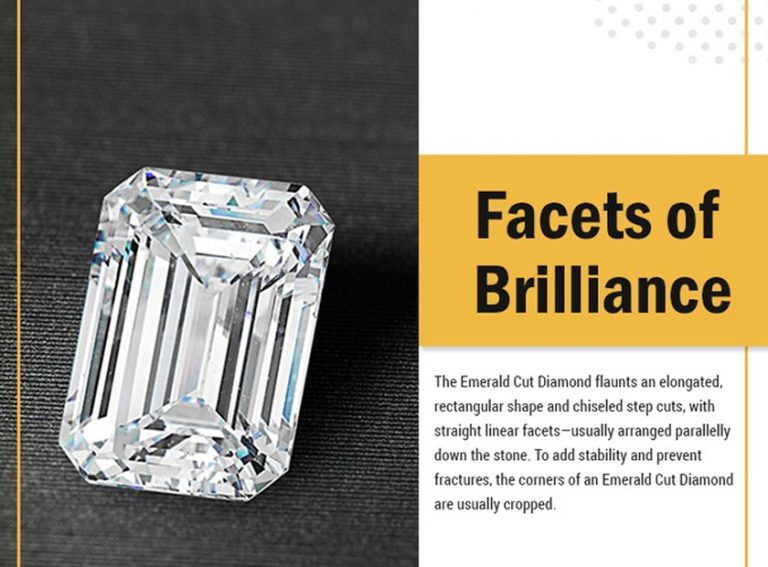
Emerald cut: This elegant cut diamond has a rectangular shape with stepped facets.
-
Princess cut: This diamond cut gives a square or rectangular shape and typically has 58 facets.
-
Oval cut: With 56 to 58 facets, this elongated oval shaped diamond cut offers a high level of brilliance.
-
Asscher cut: This square shaped diamond cut offers a high level of brilliance.
-
Pear cut: A combination of round and marquise diamond cuts, this cut has 58 to 71 facets.
-
Heart diamond cut: This diamond shape has 56 to 58 facets and rounded lobes that give it a heart shape.
Why facets matter in lab grown diamonds
Both lab grown diamonds and mined diamonds have the same physical, chemical, and optical properties. Hence, facet quality is as important in lab diamonds as it is in mined diamonds. Lab grown diamonds are created through controlled treatments and have exceptional clarity and color. Lab diamonds have fewer internal inclusions to distract from the facet work.
Why facet precision stands out in lab diamonds
Here are some factors that make facets important in lab diamonds:
-
Facets support in light performance of the diamond
-
Facets cut to exacting proportions lend brilliance, fire, and scintillation
-
Perfectly cut facets maximize the performance and beauty of the lab grown diamonds
-
Faceting is a key factor that determines whether a lab grown diamond achieves its full potential
Because lab grown diamonds are more consistent internally, facet execution becomes one of the strongest visual differentiators.
Facet geometry and alignment
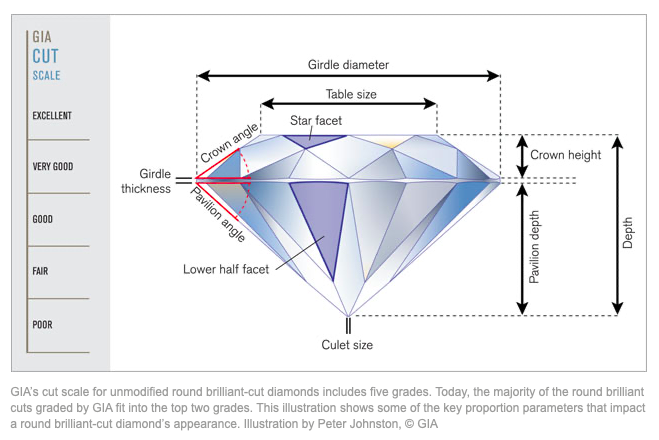
Two key factors in lab grown diamonds are facet geometry and alignment. The two measurements—facets and alignment—must be in harmony. For instance, the relation between these two elements is evident in the pavilion angle and crown angle. If the pavilion is cut too shallow or too deep, it can leak or trap light.
1. Facet geometry
Facet geometry is the precise angles at which each surface is cut relative to the diamond’s table and girdle. Angles determine where light reflects or escapes in the diamond.
2. Alignment
Misalignment in facets can disturb the way light travels. Alignment and facet geometry are closely related. Proper alignment of facets ensures consistent sparkle. Diamonds with well aligned facets display patterns.
Facet factors and their impact
| Facet factor | Role in diamond | Impact |
| Facet alignment | Controls light refraction and reflection pathways | Lends brilliance and light return intensity |
| Facet alignment | Ensures symmetry in light distribution across the diamond | Creates balanced pattern and even sparkle |
| Facet polish | Impacts smoothness and light reflection | Provides clarity and reduces light scatter |
| Facet size proportion | Balances light entry, reflection, and dispersion | Impacts fire and scintillation |
| Table percentage | Controls light entering through top | Influences balance between brilliance and fire |
| Pavilion depth | Determines internal reflection and light return | Prevents light leakage |
How does facet symmetry affect diamond brilliance?
Symmetry is an important aspect in diamonds. Even if a diamond has well-cut facets, they have to be arranged symmetrically. Symmetry is all about facets aligning with each other and with the diamond’s central axis. When facets are symmetrically arranged, it creates a mirror-image effect on all sides.
What gemologists examine when checking symmetry
Here are some factors that gemologists look for when examining symmetry:
-
If the table is perfectly centered
-
If the culet aligns with the table
-
Whether opposing facets are identical in size and shape
-
If the girdle maintains consistent thickness around the diamond’s perimeter
A diamond can have many facets, but without symmetry, sparkle will still be compromised.
Types of facets
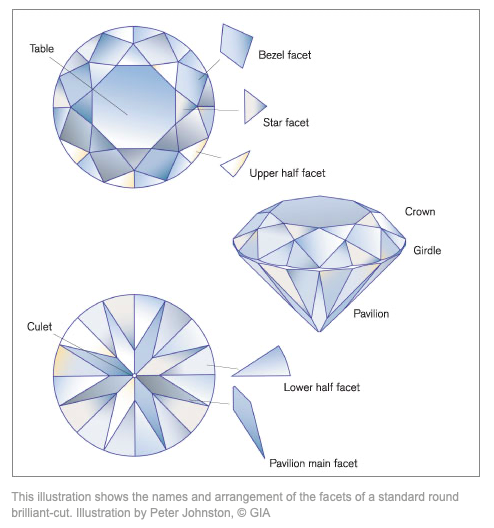
1. Crown facets
Crown facets are on the upper side of the diamonds. The largest facet is the table, which is on the top surface. Most light enters through this. The table is surrounded by star facets, such as kite-shaped, bezel facets, and upper girdle facets. The main role of crown facets is to gather light and direct it into the diamond’s interior.
2. Pavilion facets
Pavillion facets are below the girdle. They reflect light back through the crown. These facets include pavilion main facets from the girdle to the culet, and lower girdle facets. The pavilion works as the diamond’s reflection chamber.
3. Girdle facets
The girdle facets are placed on the outer edge where the crown and pavilion meet. The girdle facet prevents chipping. The girdle’s thickness and consistency impact the diamond’s weight distribution and proportions.
4. Culet
The culet is a small facet at the bottom of the pavilion. Large culets can be visible through the table and that is why many diamond cutting experts try to keep the cutlets small.
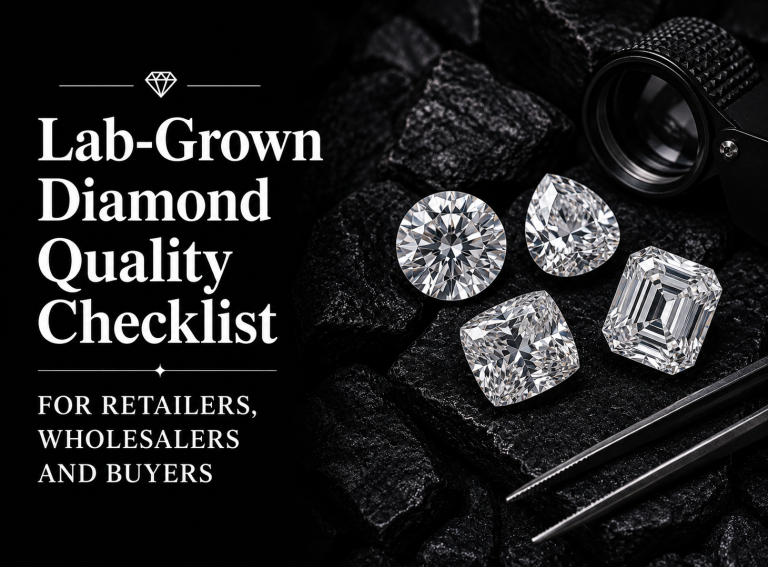
Diamond shapes and their facets
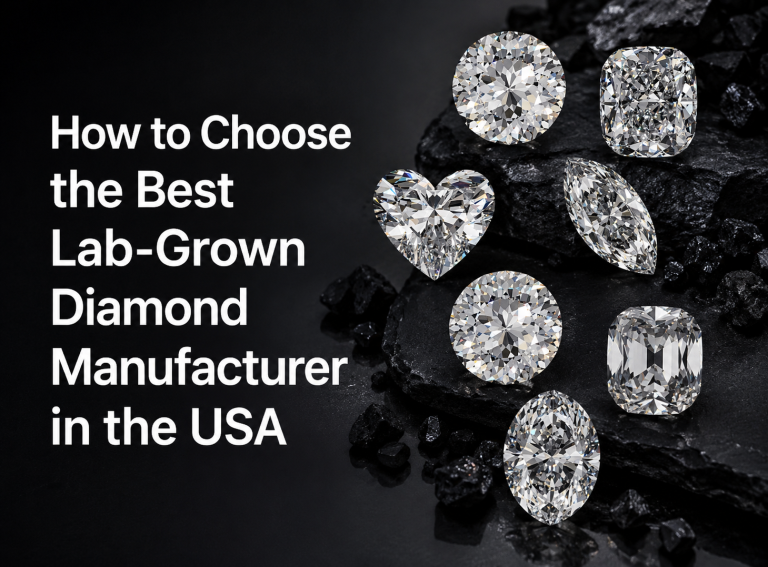
How facet count varies by shape
| Shape | No. of facets | Impact |
| Round brilliant | 58 | Produces maximum brilliance |
| Princess | 58-76 | Modern and brilliant appearance |
| Emerald | 57-58 | Elegant and sophisticated |
| Cushion | 58-64 | Vintage appearance, good brilliance |
| Oval | 56-58 | Finger-flattering proportions |
| Asscher | 58 | Has art-deco appeal |
| Radiant | 70 | Hides color and inclusions |
| Pear | 58-71 | One pointed end, one round end |
| Marquise | 56-58 | Provides maximum finger coverage |
| Heart | 56-58 | Most preferred as a symbol of love |
| Baguette | 24 | Provides high clarity |
Important clarification: More facets do not always mean more sparkle. Facet quality and alignment matter more.
How diamond facets influence pricing
Here are the ways in which diamond facets impact the pricing of the diamond.
Gemological institutions grade diamonds for cut grades—Excellent to Poor—depending on how well the facets are cut. Excellent cut diamonds carry higher price tags, whereas Poor cut diamonds fetch low prices.
Facet quality also impacts pricing based on the visual performance of the diamond. If a diamond’s facets do not provide good light performance, it shows visually, and may be sold only at a low price.
Two diamonds with identical features can look different based on faceting. Seasoned customers and diamond experts can tell the difference and price the diamonds accordingly.
Another factor related to diamonds’ faceting and price is the carat weight. Well cut diamonds utilize maximum rough diamond and there is less wastage. A higher carat weight commands a higher price.
How to choose the right facet style
Facet style decision checklist
-
If you want a diamond with sparkle and brilliance, go for a round brilliant cut diamond with 58 facets.
-
For those who like vintage appeal or a diamond that emphasizes size over brilliance, step-cut shapes, such as Asscher or Emerald are more suitable.
-
For modern and contemporary tastes that focus on both, brilliance and uniqueness, cushion cut, radiant cut and oval cut diamonds are more suitable.
-
The facet style you must choose also depends on your lifestyle and personal preference. For instance, for active and busy workers, facets with sharp edges are not advisable. You’d rather choose round shapes.
-
Budget is a key consideration when choosing a diamond and faceting style. For instance, fancy shapes are less expensive than classic round brilliant.
Ready to buy lab made diamonds with the best sparkle and brilliance?
Now that you know how important the role of facets is in different types of diamond shapes and cuts, you can make an informed choice when you look for your lab grown diamonds.
The facets of diamonds affect a lot of factors such as the way it reflects light, the diamond’s performance, the shape, the quality, the pricing, and its overall appeal.
If you’re looking for lab grown diamonds with brilliance and sparkle, you’re in luck with Grown Diamond Corporation’s wide range of designs and collections.