Loading...

Diamond Shapes Princess
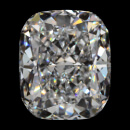
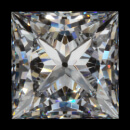
Princess Cut Diamonds

The princess cut diamond is the second most popular diamond shape in the world, behind only the round brilliant. It is a square modified brilliant cut, designed with facets positioned similarly to a round cut diamond, which gives it comparable brilliance in a square or rectangular form. This princess-shaped diamond is a top choice for engagement rings because it delivers strong light performance at a lower price per carat than round. Princess cut lab grown diamonds retain more of the rough stone during cutting, losing only around 20% of the rough compared to 40-60% for round cuts. That efficiency is reflected in the price, making the princess cut diamond one of the most commercially viable shapes for retailers to stock.

Key features of a princess cut diamond

The princess-shaped diamond has a square or slightly rectangular face with pointed corners and a brilliant faceting pattern of 50 to 58 facets. Symmetry is critical for this cut. The pointed corners concentrate color, so D to F grades are ideal for premium stock, and G to H grades are strong commercial sellers. The cut hides inclusions well, making VS1 to VS2 the most popular clarity range. Princess cut diamonds may appear slightly smaller face-up than other shapes at the same carat weight due to their deeper pavilion, but that depth contributes directly to their brilliance and fire.

Why are princess-cut diamonds a popular choice for engagement rings?

The princess-cut diamond engagement ring is the second most requested style after round solitaires. The square silhouette is modern and geometric, and its brilliant faceting gives it a sparkle comparable to a round cut. Princess cut diamond engagement rings are available across a wide range of carat weights, color grades, and clarity levels, which gives retailers flexibility to serve different price points from a single shape category. The cut also pairs well with channel-set and pavé bands, making it easy to build a versatile engagement ring inventory around it.

Why choose princess-cut diamonds from Grown Diamond Corporation?

GDC manufactures loose princess-cut diamonds at its own facilities, direct to the trade. Retailers and wholesalers access certified princess-cut lab-grown diamonds through the CRBN platform, with 360-degree videos, grading certificates, and real inventory. The supply chain has no middlemen. For trade partners who need a consistent supply of princess-cut diamonds across multiple grades and carat weights, GDC is the direct source.

Princess cut diamonds: pros and cons
The princess-cut diamond delivers near-round brilliance in a square form factor. Its efficient use of rough material makes it more affordable per carat than round, and its geometric shape suits modern jewelry design well. The trade-off is the pointed corners, which are the most vulnerable part of the stone to chipping. Prong settings that protect all four corners are essential for retail pieces. This is a practical consideration for trade partners to factor into setting recommendations for their customers.
GDC NEWSLETTER
The Modern Diamond Journal by GDC

Join 2,000-plus trade partners who source princess-cut diamonds and princess-cut lab-grown diamonds from GDC. Register to access the full inventory.

Register Now
FAQs

The princess cut diamond is a square modified brilliant cut with 50 to 58 facets arranged similarly to a round brilliant. This gives it comparable light performance in a square or rectangular form, making it the most popular fancy-shaped diamond for engagement rings.

The pointed corners of a princess-cut diamond are the most prone to chipping. Retailers should recommend four-prong or V-tip prong settings to protect the corners. Symmetry grading is also critical for this cut since asymmetry is visible face-up.

The modern princess cut diamond was developed in the 1960s by Arpad Nagy, a diamond cutter in London. The current form was refined and established by 1980 by Betzalel Ambar, Ygal Perlman, and Israel Itzkowitz. It became widely popular through the 1980s and 1990s.

The princess cut diamond is the second most popular shape globally, behind round. It delivers strong brilliance at a lower price per carat, which makes it an accessible alternative for retail customers who want sparkle and a modern shape at a lower price than round.

A princess-cut lab-grown diamond typically costs 30 to 40% less per carat than a round lab. grown diamond of the same grade. At wholesale from GDC, trade partners access manufacturer direct pricing with no retail markup.

Yes. A princess cut diamond retains around 80% of the rough stone during cutting, compared to 40 to 60% retention for a round brilliant. That higher yield is a primary reason princess-cut diamonds are more affordable per carat than round cuts.
Enquire Now

Enquire Now

By clicking Submit, you consent to your information being shared with GDC in accordance with our privacy policy. The information shall be maintained in full confidentiality and shall not be shared with any third party. We may use this information to contact you regarding your enquiry via Email, SMS, or WhatsApp.

I agree and authorize GDC to contact me via call and other communication channels. This consent will override any registration with the DNC/NDNC.
WhatsApp
Read
More
Princess
+ More Diamond Shapes