Manufacturing of Lab Diamonds: An Overview


While you must have heard of and even own lab-grown diamonds, have you ever wondered how they are manufactured?
Lab diamond manufacturing is a fascinating process, almost magical. In this blog, you can read about the manufacturing diamond process and how diamonds are cut and polished and graded. This is your handy crash course in lab grown diamond manufacturing that you can refer to anytime!
What are Lab Grown Diamonds?
Defining lab grown diamonds would be incomplete without mentioning mined diamonds. Unlike mined diamonds that are sourced from the earth, cultured diamonds are manufactured or created in laboratories. However, lab diamonds are real diamonds. They are created through the same processes that form diamonds under the earth.
Different Types of Manufactured Diamonds
Lab-grown diamonds are a broad category. There are different types of lab grown gemstones.
Here are some:
-
Lab Grown Diamonds: Lab grown diamonds are also known as cultured or engineered diamonds, lab diamonds are manufactured in controlled laboratories by stimulating the conditions that form natural diamonds under the Earth.
-
Cubic Zirconia: Made from zirconium dioxide, cubic zirconia is similar to diamonds but lacks the hardness and brilliance of diamonds. For that reason, it is more affordable compared to lab diamonds.
-
Synthetic Diamonds: Synthetic diamonds are produced via the same methods as lab diamonds. These diamonds can be used for various industrial applications, such as cutting tools, electronics, etc.
Lab grown diamonds: Manufacturing Process
There are two lab-grown diamond manufacturing methods: HPHT and CVD. Read more about these processes here:
High Pressure High Temperature (HPHT) Process:
The HPHT process of creating lab grown diamonds was introduced in the 1950s. This was the first ever method used to create real diamonds in laboratories.
In the HPHT process, a good-quality diamond seed is placed inside a chamber along with other materials, such as metals. Next, these materials are made to go through high pressure and temperatures. This process leads to the process of crystallization that forms a lab-grown diamond.
Chemical Vapor Deposition (CVD):
The CVD process involves filling a chamber with a diamond seed, and gasses hydrogen, oxygen, and carbon. This chamber is then heated to high temperatures, which leads to the precipitation of carbon from the gases that stick to the substrate and crystallize into a lab diamond.
Diamond Cutting and Polishing Processes
Whether they are mined diamonds or engineered diamonds, all rough diamonds go through the process of cutting and polishing to take on their final shape and brilliance.
-
Rough Diamond Assortment: The first step involves segregating diamonds based on shape, size, weight, etc. parameters. At this stage, rough diamonds are also sorted into those that can be broken into multiple pieces and those that can be directly sent for the next steps.
-
Planning and Marking: The next step is to plan and mark the diamonds—which ones would be cut and how. The process of planning a lab-grown diamond cutting can be manual or involve an automated process that runs on software.
-
Cutting and Polishing: This step involves shaping, bruiting, and cutting polishing diamonds. This process can be manual, or laser based. This is the stage at which the rough diamond turns into a cut and polished lab diamond into a chosen shape.
Lab Grown Diamond Grading
All diamonds, mined or cultured diamonds, are graded for the diamond 4 Cs.
1. Cut: Cut refers to the quality of the diamond’s proportion and arrangement of facets. The cut of a lab diamond gives it its sparkle. The GIA cut grade ranges from ‘Excellent’ to ‘Poor’.
2. Color: Diamond color is graded from D to Z, with D being those that do not have any color or tint, while Z being those that have light color. If you’re looking for fancy color lab grown diamonds, you will find a range of options.
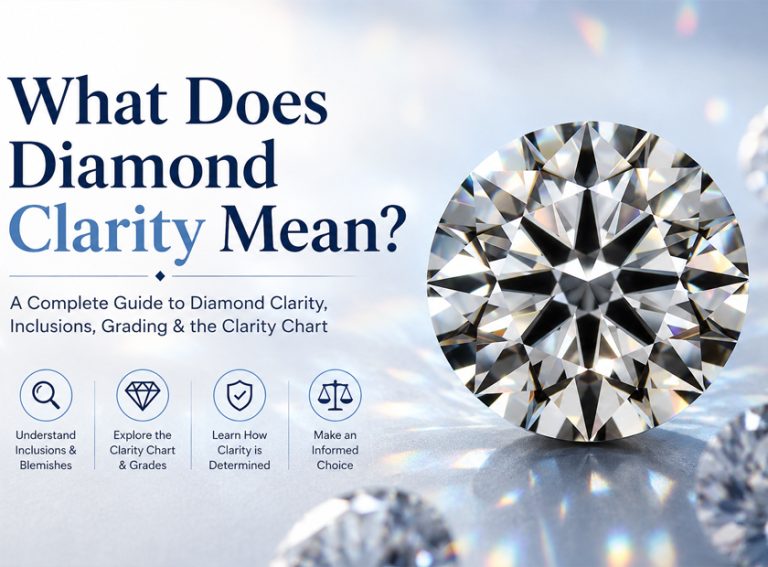
3. Clarity: Clarity of cultured diamonds refers to the absence of inclusions or blemishes. Clarity is graded on the range from FL (flawless), IF (internally flawless), VVS (very very slightly included) VS (very slightly included), SI (slightly included) and I (included).
4. Carat: Carat refers to a diamond’s weight, for example, 1 carat, 2 carat, etc.
Wrap up
Manufacturing diamonds is a specialized process. With the growing popularity of lab-grown diamonds, there is a huge demand in the market. And for connoisseurs, it’s essential to know and understand how diamonds are created in laboratories. If you’re looking to buy lab diamonds, you’re in luck with Grown Diamond Corporation’s extensive collection of high-quality lab diamonds.